The “KryoMon.AT – Cryosphere Monitoring Austria” project provides, for the first time, a comprehensive overview of long-term changes in the Austrian cryosphere – that is, snow cover, glaciers, permafrost and lake ice cover duration. Supported by several research groups in Austria and Germany, the project creates a solid foundation for a better understanding of climate-related changes through standardised data processing and accessible reports.
How it all began: Standing on the shoulders of giants
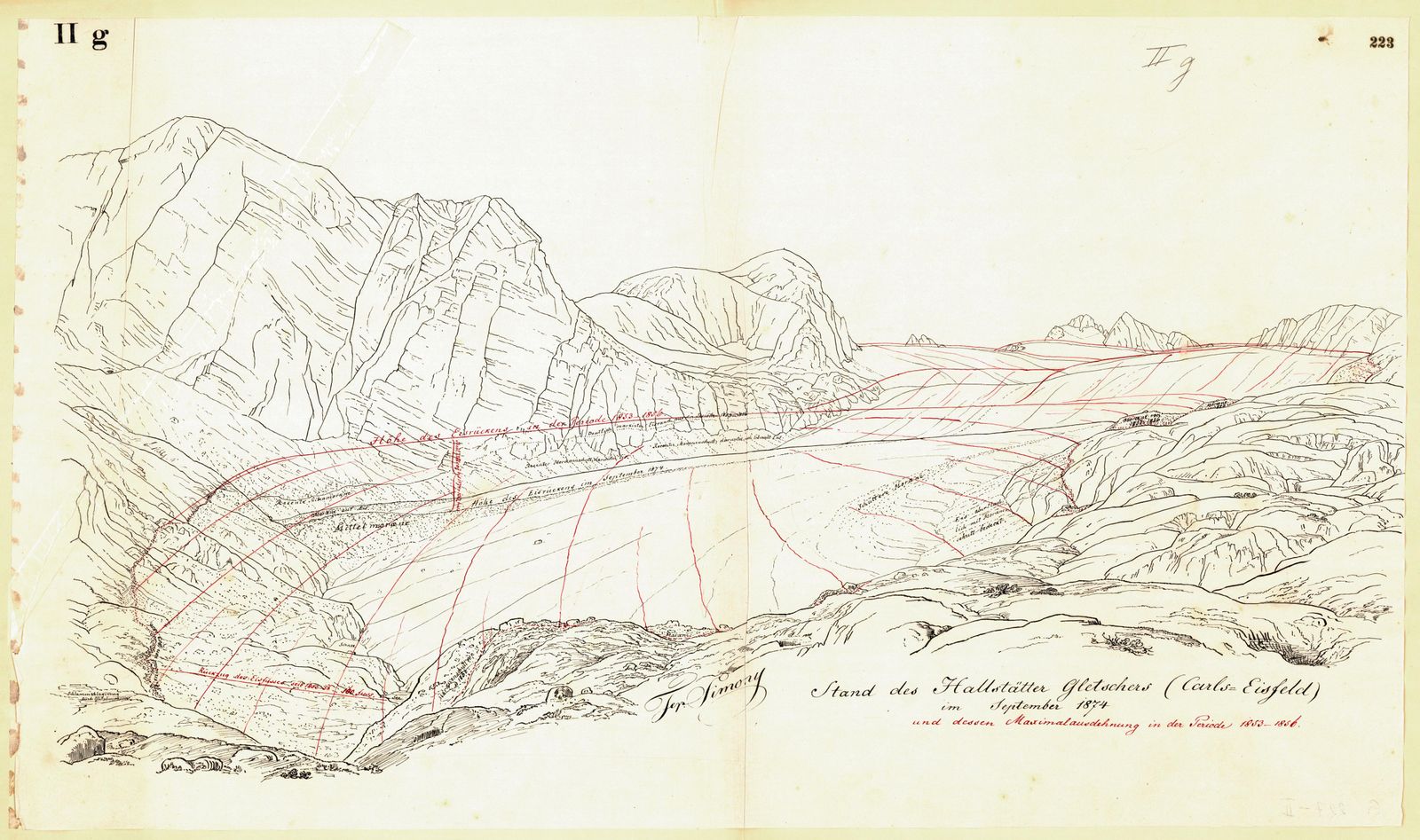
Research into the cryosphere has a long tradition in Austria. As early as 1846, Friedrich Simony established the first known glacier measurement mark on an Austrian glacier (Groß et al. 2018, p. 53; Simony 1895, p. 129). In 1882, Ferdinand Seeland established the first cross-section on the Pasterze to measure flow velocity (Wakonigg 1991, p. 273). In 1938, Wolfgang Pillewizer set up movement profiles on the Äußeres Hochebenkar rock glacier (Pillewizer 1957, p. 38). At Lake Lunz, annual measurements of the seasonal lake ice cover began as early as 1905 (Müllner 1924, p. 139), and in Kremsmünster, the number of days with snowfall has been recorded since 1763 (Mohnl 1994, p. 37).
These examples bear witness to remarkable historical commitment and foresight, which paved the way for subsequent generations of scientists. From this early pioneering spirit emerged insights that far exceeded their initial appreciation. What was once regarded as a laborious and of little use niche science laid the foundation for our current understanding of the interactions between climate and the cryosphere. Today, these continuous measurement series not only provide insights into historical changes but also serve as a valuable basis for forecasting future developments.
Challenges and opportunities
Over time, the number of monitoring programmes and the range of cryosphere components recorded in Austria have increased. To this day, funding and responsibility for these programmes are shared among various research groups and institutions (e.g. the hydrographic services of the federal states, energy producers, GeoSphere Austria, and the Hohe Tauern National Park).
This fragmented responsibility also affected the processing, presentation and availability of the collected data. Consequently, the added value of standardised, coordinated and joint data processing was not fully exploited. As a result, despite the extensive measurement programmes and data collected, changes in the Austrian cryosphere were difficult for the public, stakeholders and international interested parties to understand.
KryoMon.AT: A standardised approach is taking shape
The "Cryosphere Monitoring Austria" (KryoMon.AT) project, launched in 2022 and funded by the Federal Ministry for Climate Protection (BMK), set out to close these gaps. The aim of the project was to establish closer links between the research groups involved in Austrian cryosphere monitoring (standardised long-term observation) and to develop a joint strategy for the processing, presentation and provision of the collected data. An important first step was a two-day kick-off workshop in Vienna, where the participating researchers came together to coordinate their efforts and establish a uniform approach.
It was decided at this workshop to visualise and describe all long-term measurements of the cryosphere components (glaciers, permafrost, lake ice and snow cover) which are still ongoing today, in a clear and accessible manner within periodically published reports. These reports are intended, on the one hand, to ensure the scientific documentation of the measurement results and, on the other, to inform the public about climate-related changes in the cryosphere in a clear and engaging way.
The first KryoMon.AT report
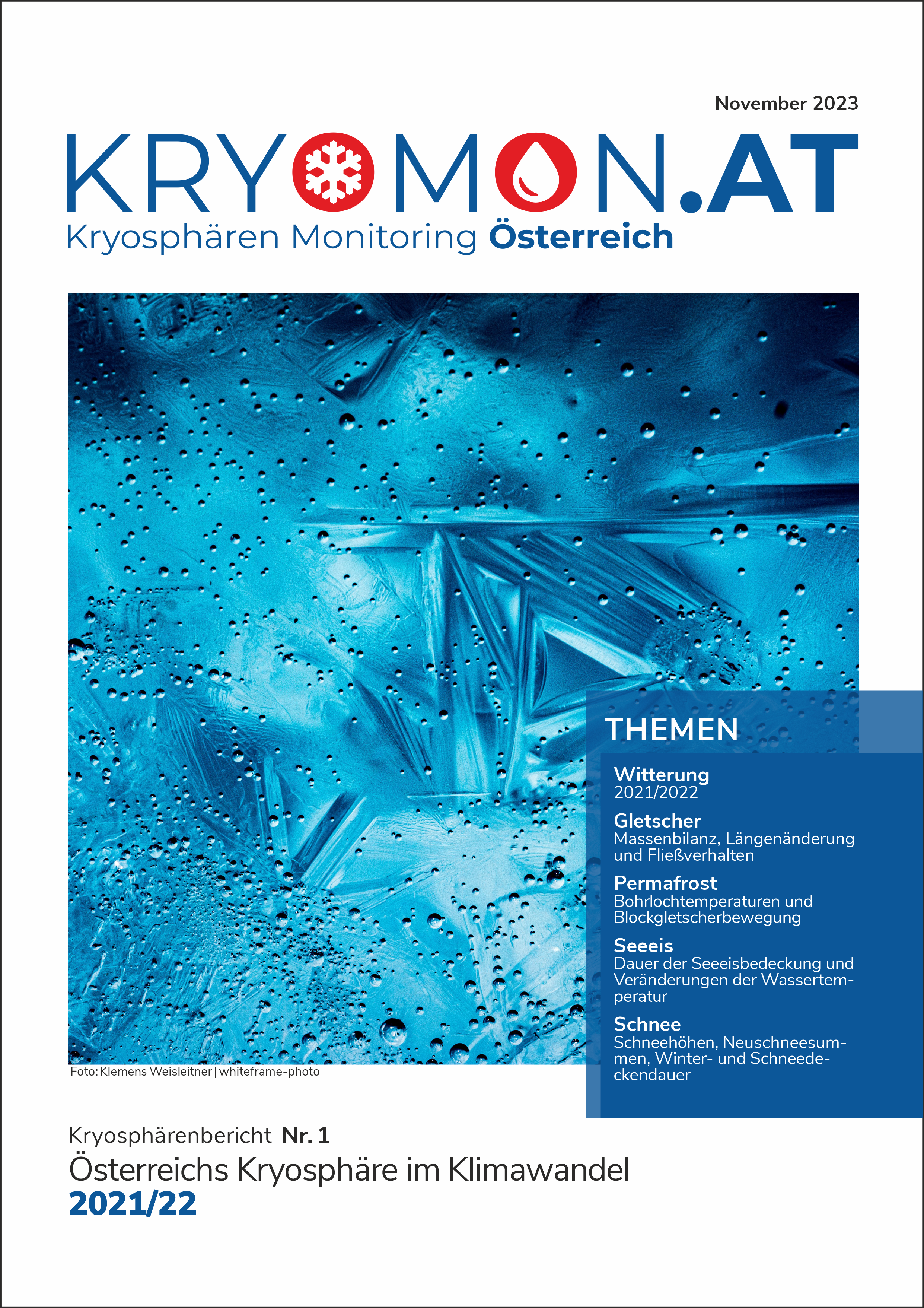
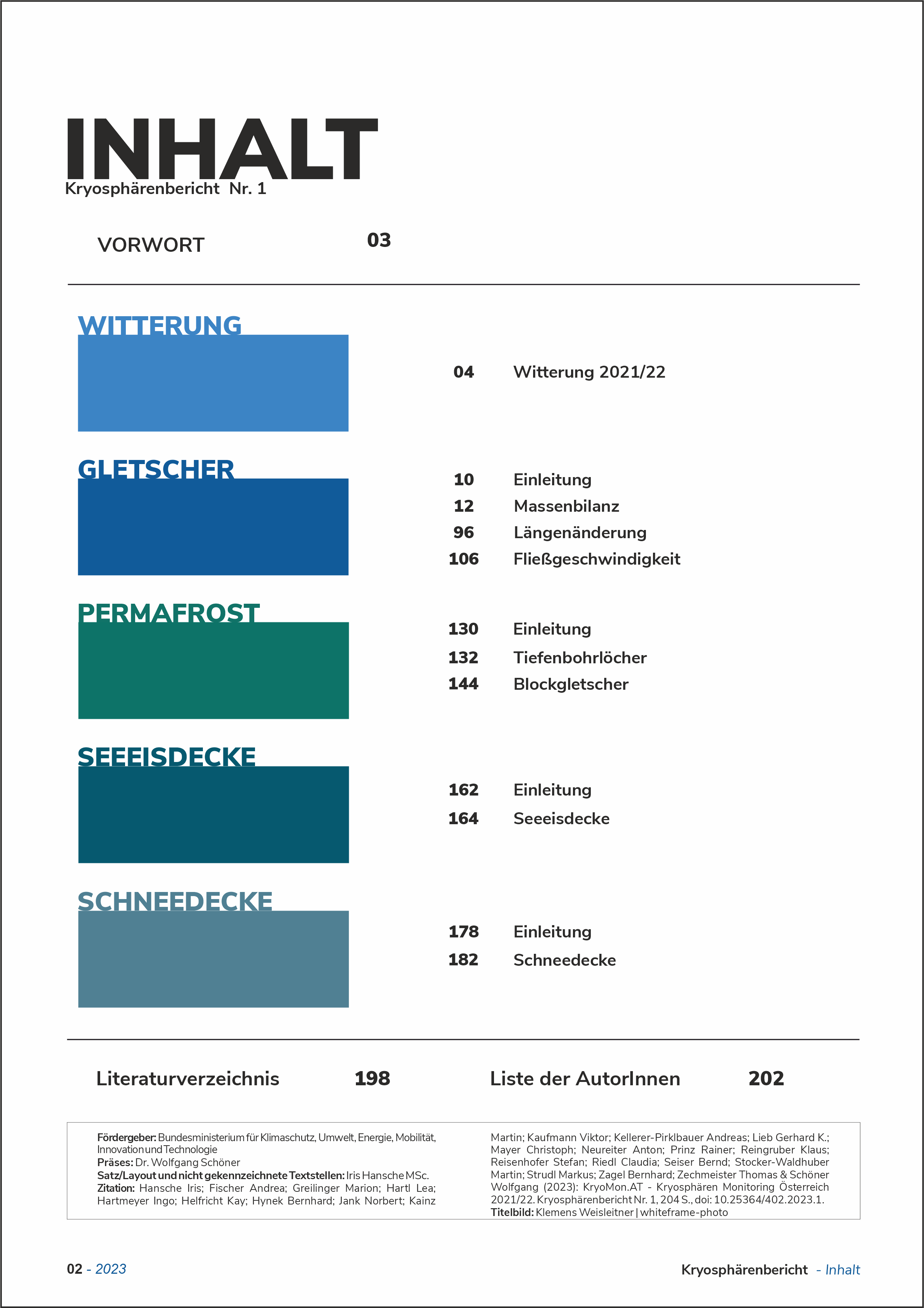
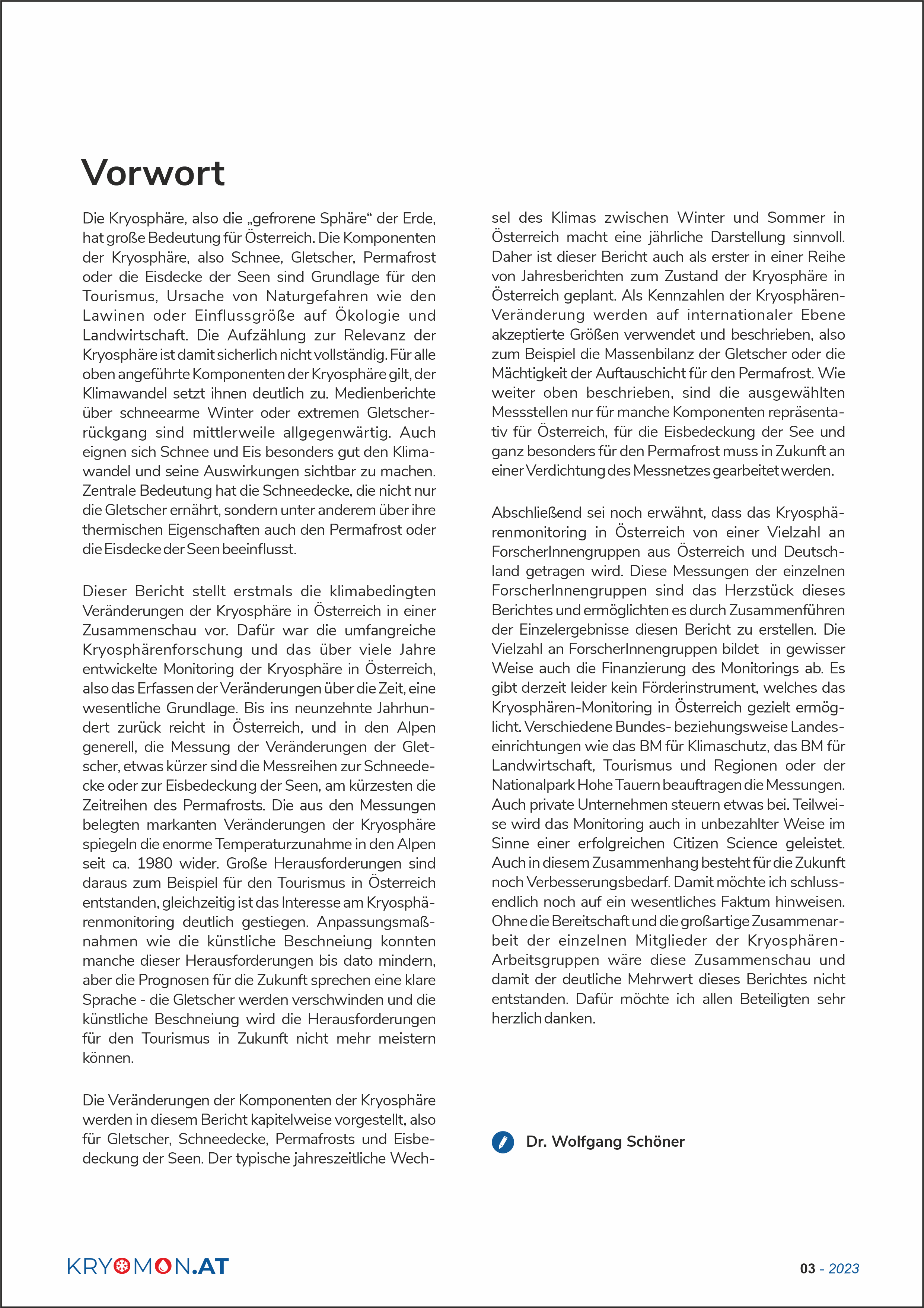
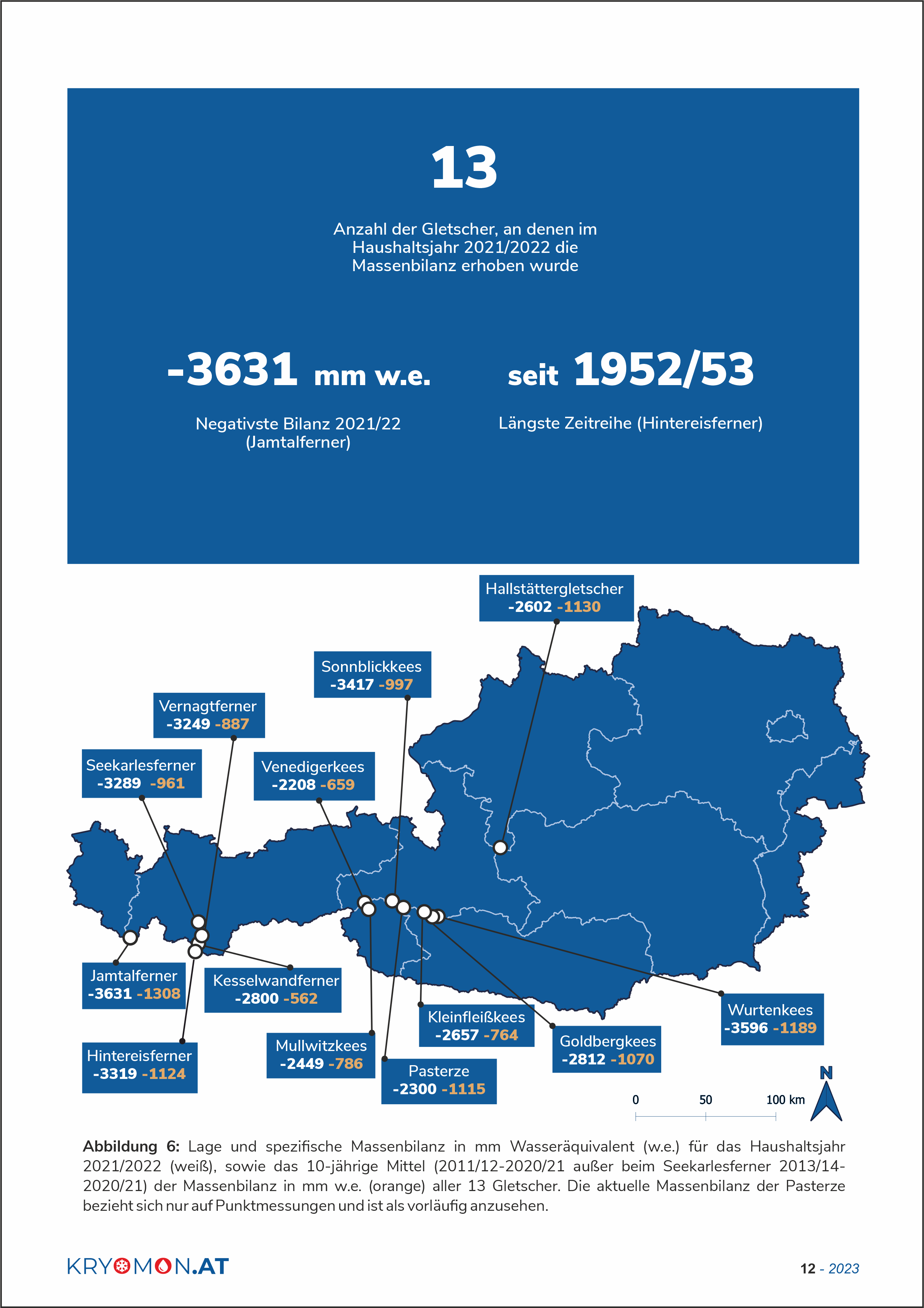
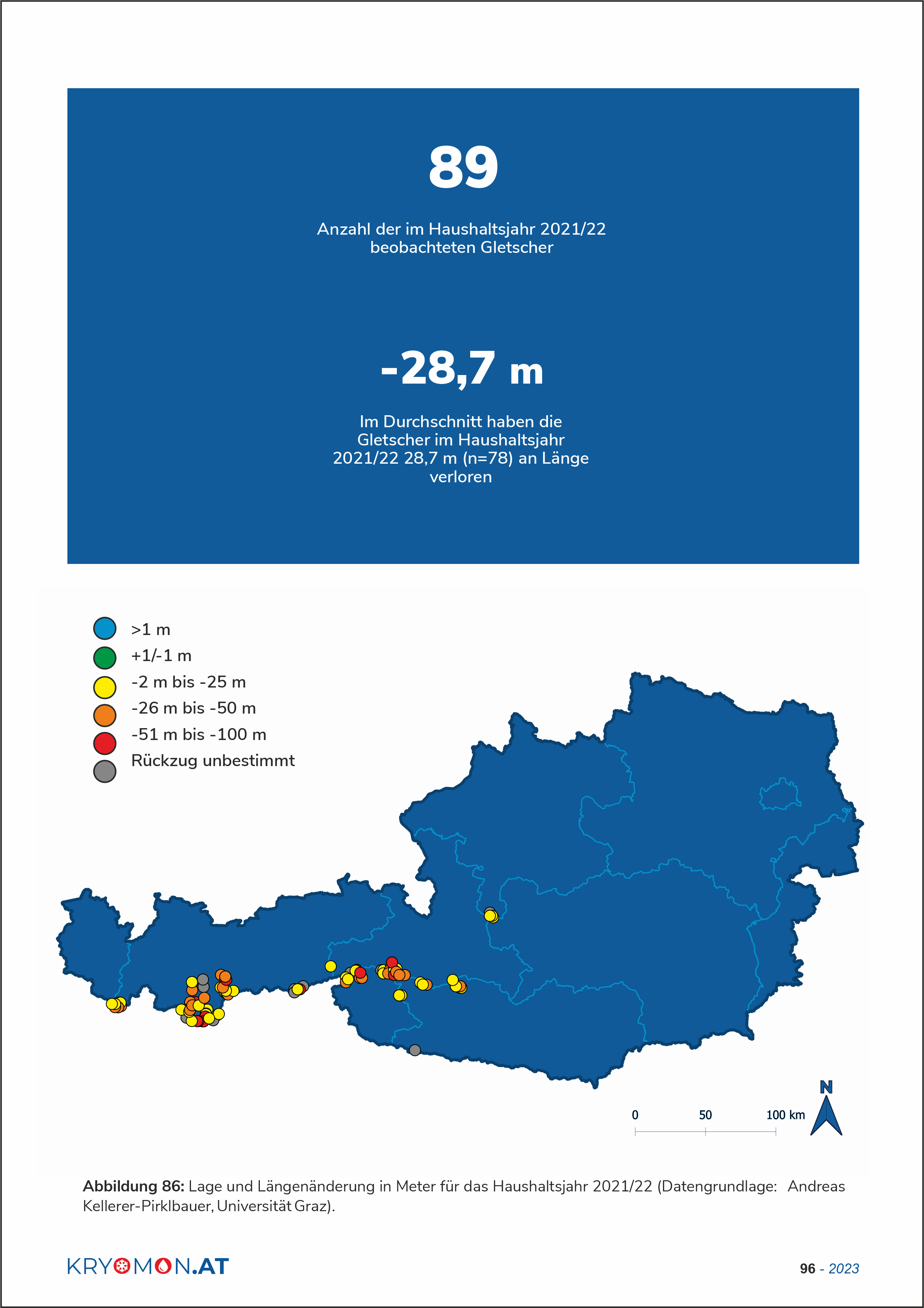
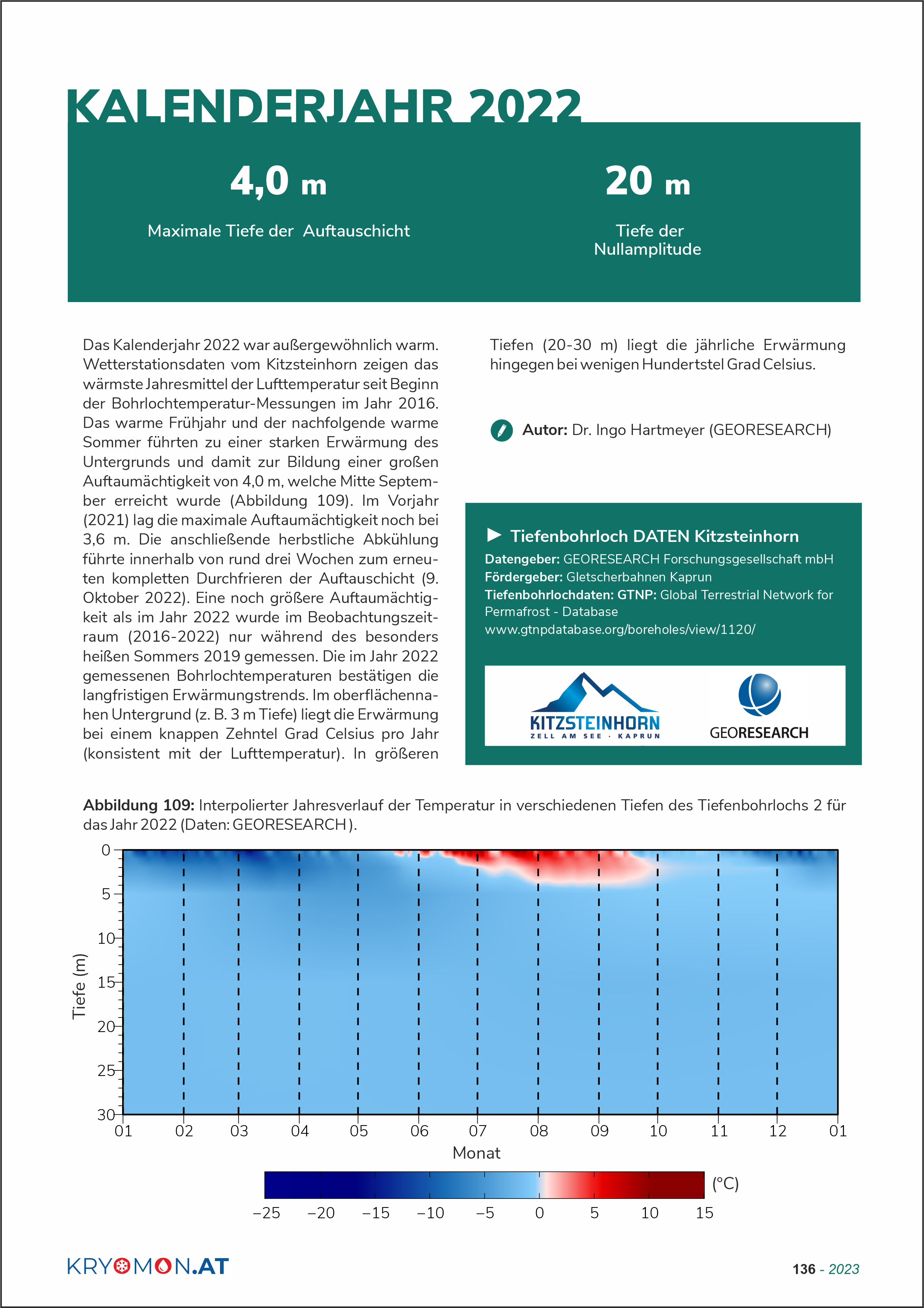
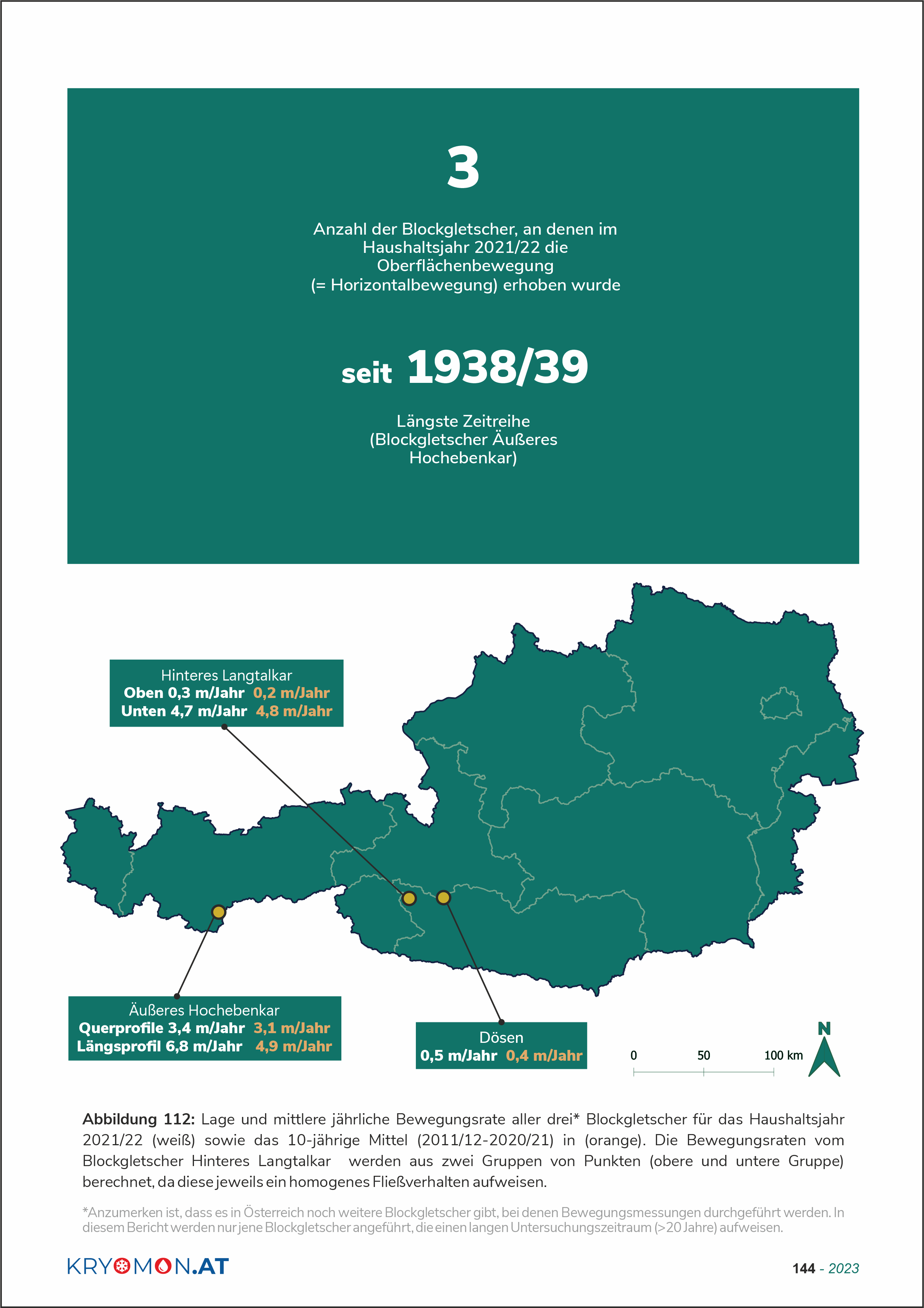
The first KryoMon.AT report was published at the end of 2023 (Hansche et al. 2023). This report is based on measurements of changes in the cryosphere in Austria dating back to the 19th century. In addition to striking comparative images of the changes, these are also described using internationally recognised parameters such as mass balance, changes in glacier length or the thickness of the active layer in permafrost, presented in the form of diagrams and explanatory texts.
A separate chapter is devoted to each cryosphere component, beginning with a description of the respective component, its relevance in the context of climate change, and an introduction to the measurement methods. This ensures that the changes presented are understandable even to readers without specialist knowledge. Subsequently, the monitoring sites for the respective component (e.g. the Hintereisferner for ‘glaciers’ or the Dösen rock glacier for ‘permafrost’) and the changes documented there are described. The information is supported by numerous images and maps, visual impressions and the highlighting of key information, key figures and facts. Quick to grasp and easy to interpret despite the wealth of information – that is the report’s overarching aim. Individual chapters can therefore be read and understood independently of one another.
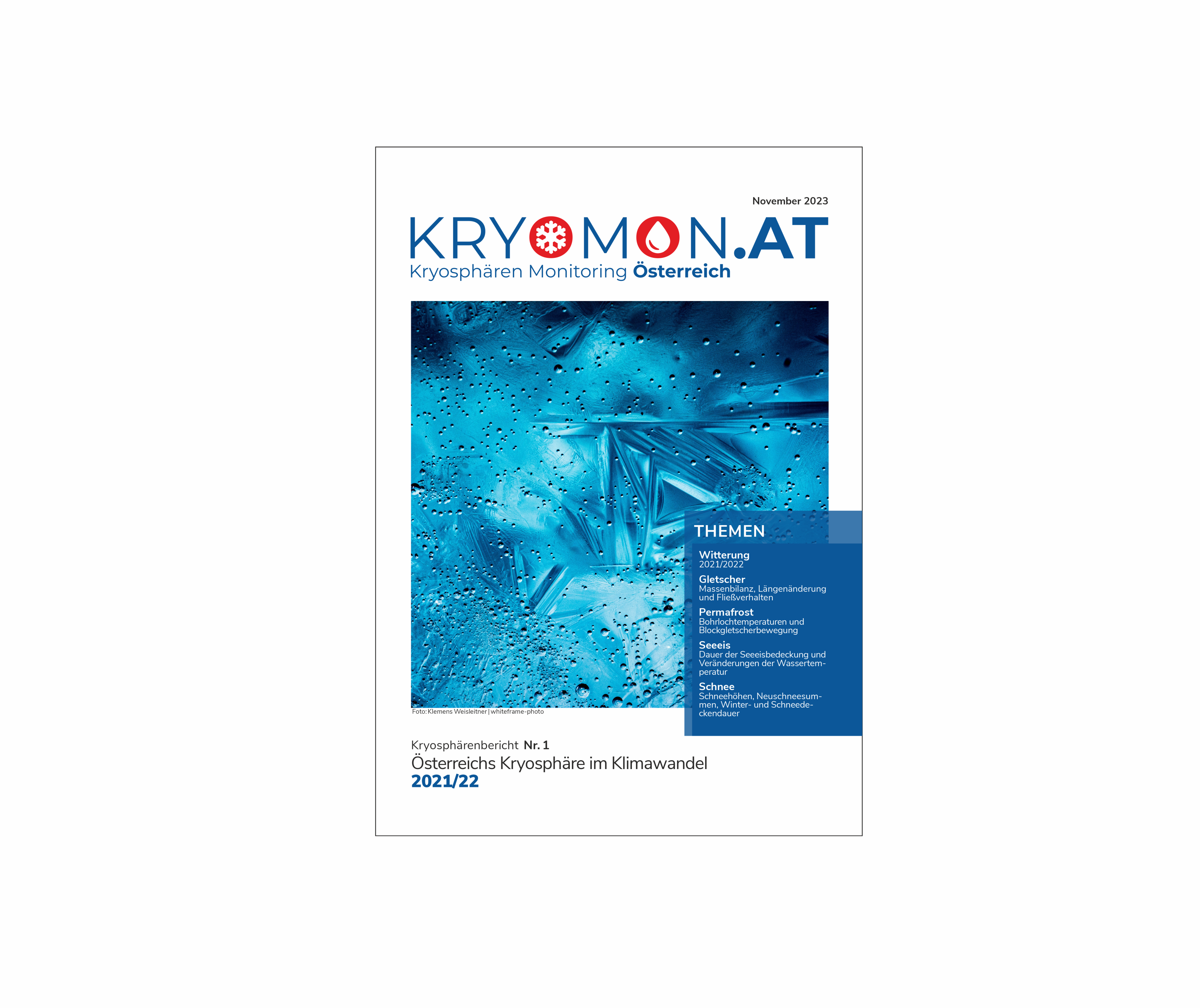
The first KryoMon.AT report – impressions in pictures (Unfortunately, only in German)

KryoMon.AT enters its second phase
In early 2025, the KryoMon.AT project was able to enter a new phase thanks to funding from the Federal Ministry of Agriculture, Forestry, Regions and Water Management (BMLUK).
Right from the start of the project, a key objective was to publish regular reports on changes in the Austrian cryosphere – that is, on developments in snow cover, glaciers, permafrost and lake ice. The continuous continuation of the project is therefore essential to ensure this long-term reporting and to be able to reliably document developments.
Against this backdrop, the research groups involved in the Austrian Cryosphere Monitoring project came together for a two-day workshop in Vienna to prepare for the next phase of the project. During the workshop, the first report was analysed jointly, areas for improvement were identified, and a roadmap for the next report was drawn up.
The second KryoMon.AT report
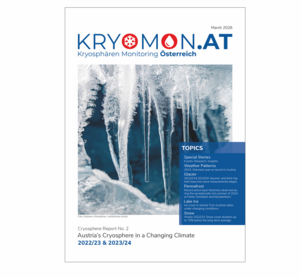
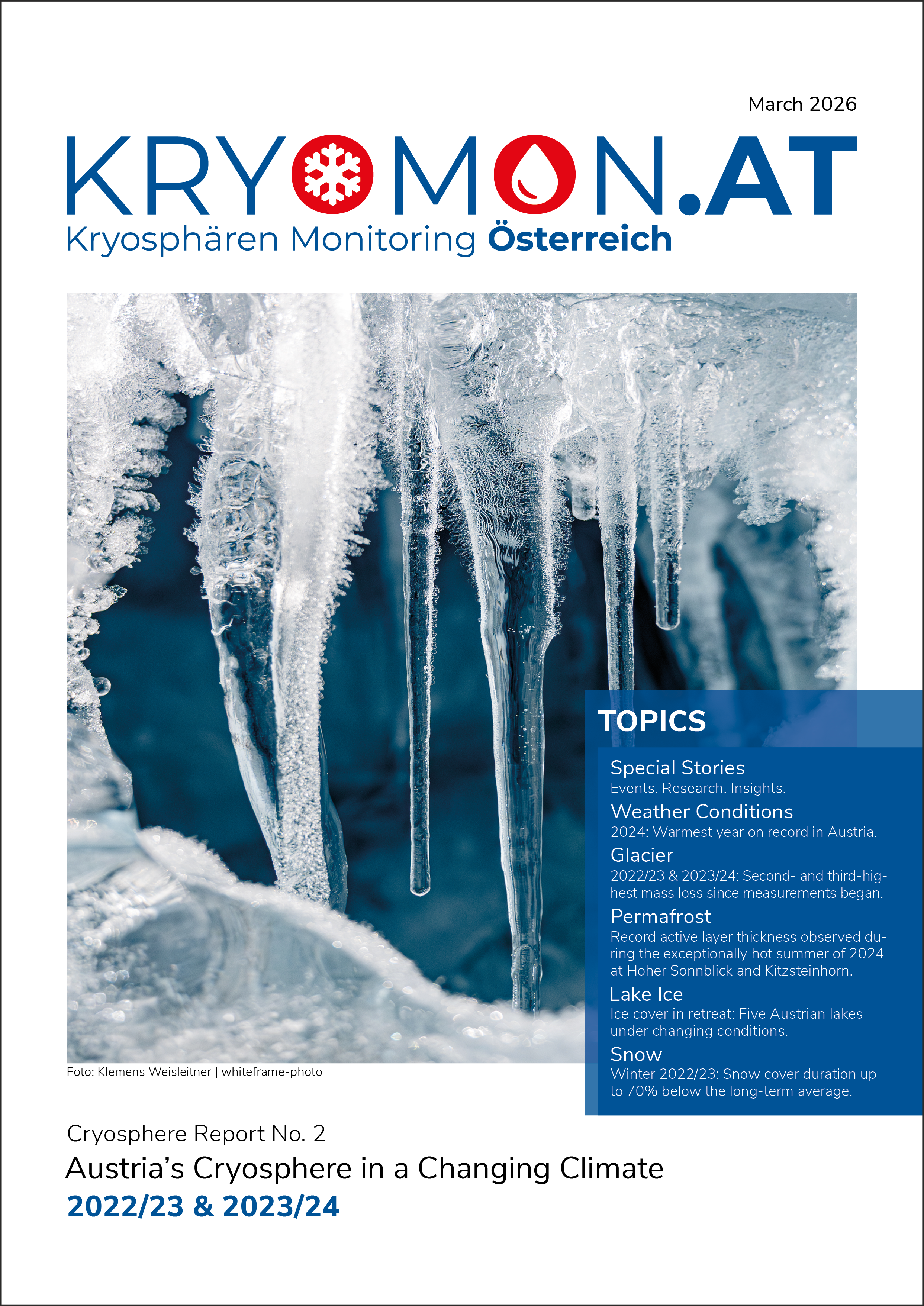
The second report ((Hansche et al. 2026), published in early 2026, differs significantly from its predecessor. Whilst the first report was primarily designed to serve as the basis for a future series of regular reports on the cryosphere and therefore contains extensive background information, the new report takes a different approach.
The first report explains, among other things, the data collection methods, describes the measurement sites – such as glaciers, deep boreholes and lakes – and outlines the historical development of the measurements. The current report deliberately omits these details and instead concentrates on a concise and clear presentation of developments in the Austrian cryosphere during the years 2022/23 and 2023/24.
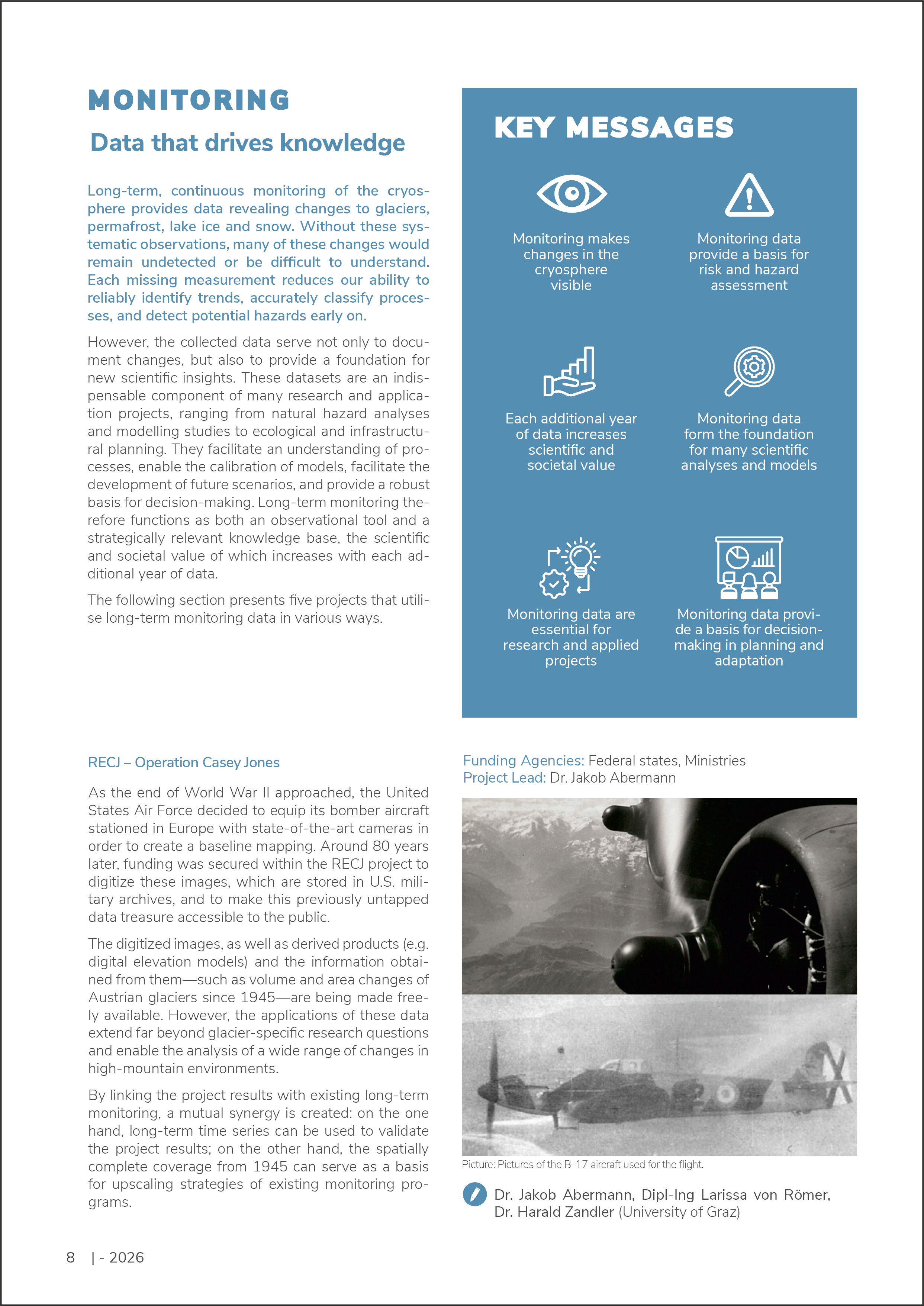
A new addition is the chapter ‘Monitoring – Data that Drive Knowledge’. It highlights that the data collected as part of the long-term monitoring programme is not merely gathered but actively used to gain new insights. The aim is to strengthen understanding of the benefits of these activities.
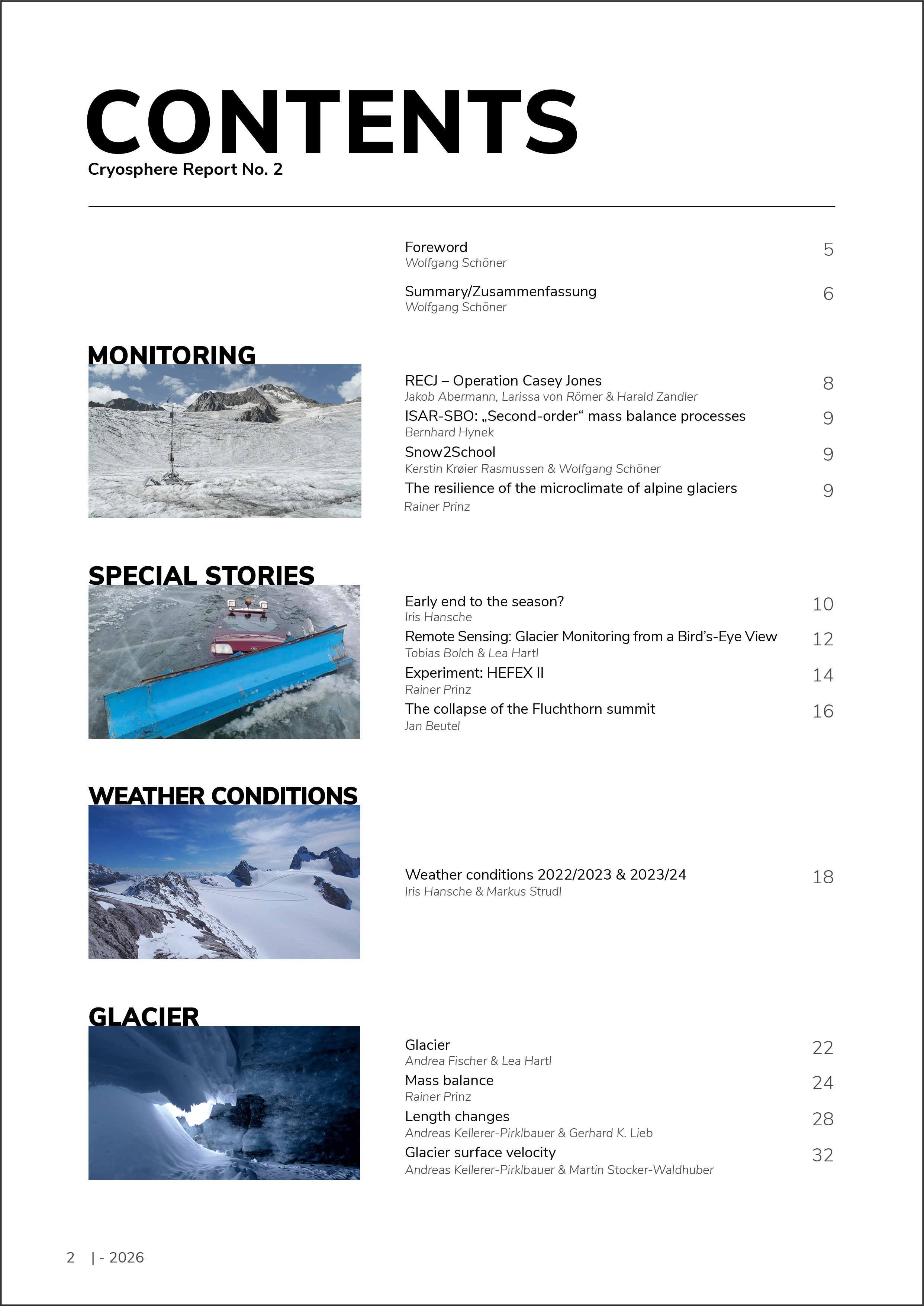
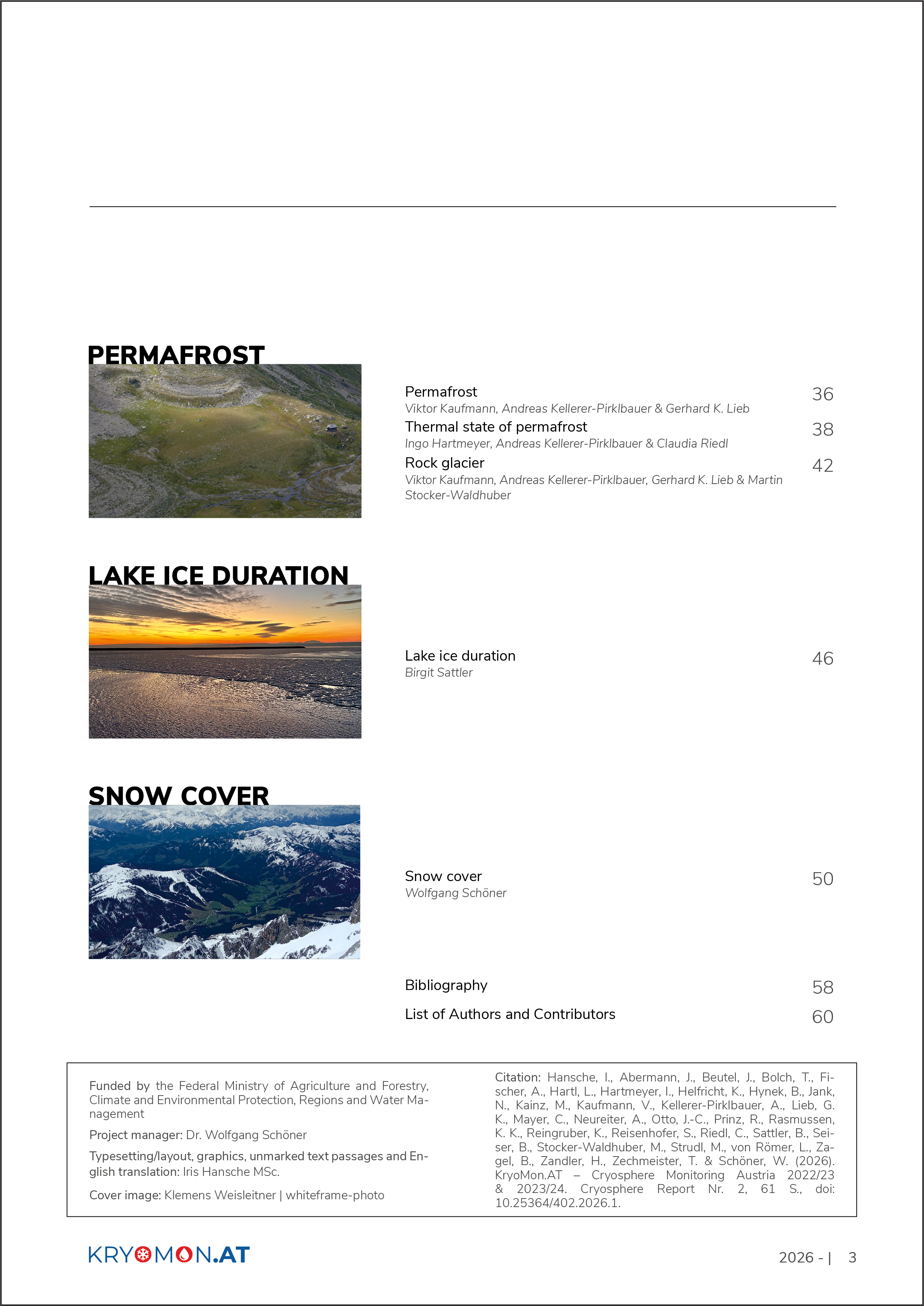
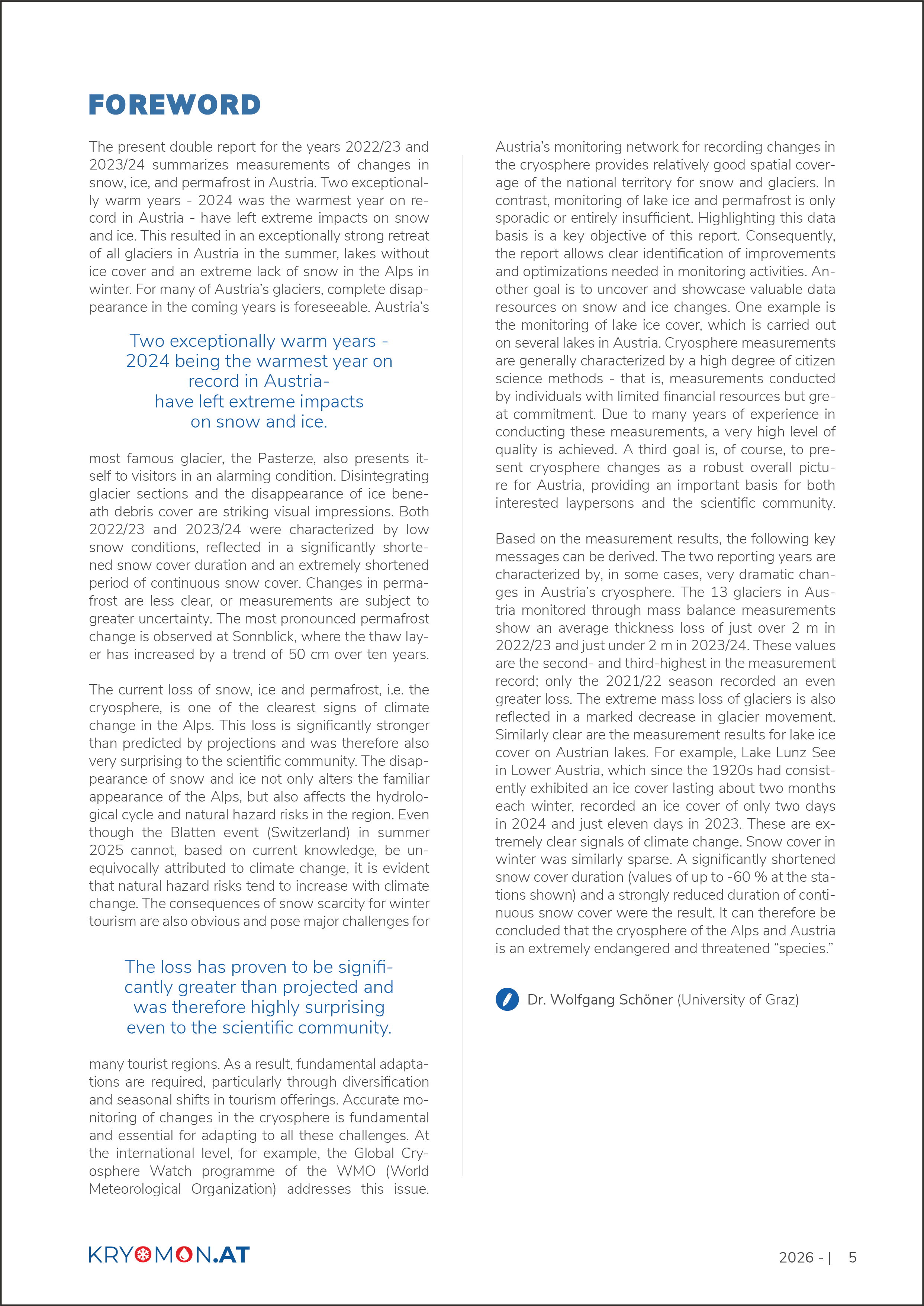
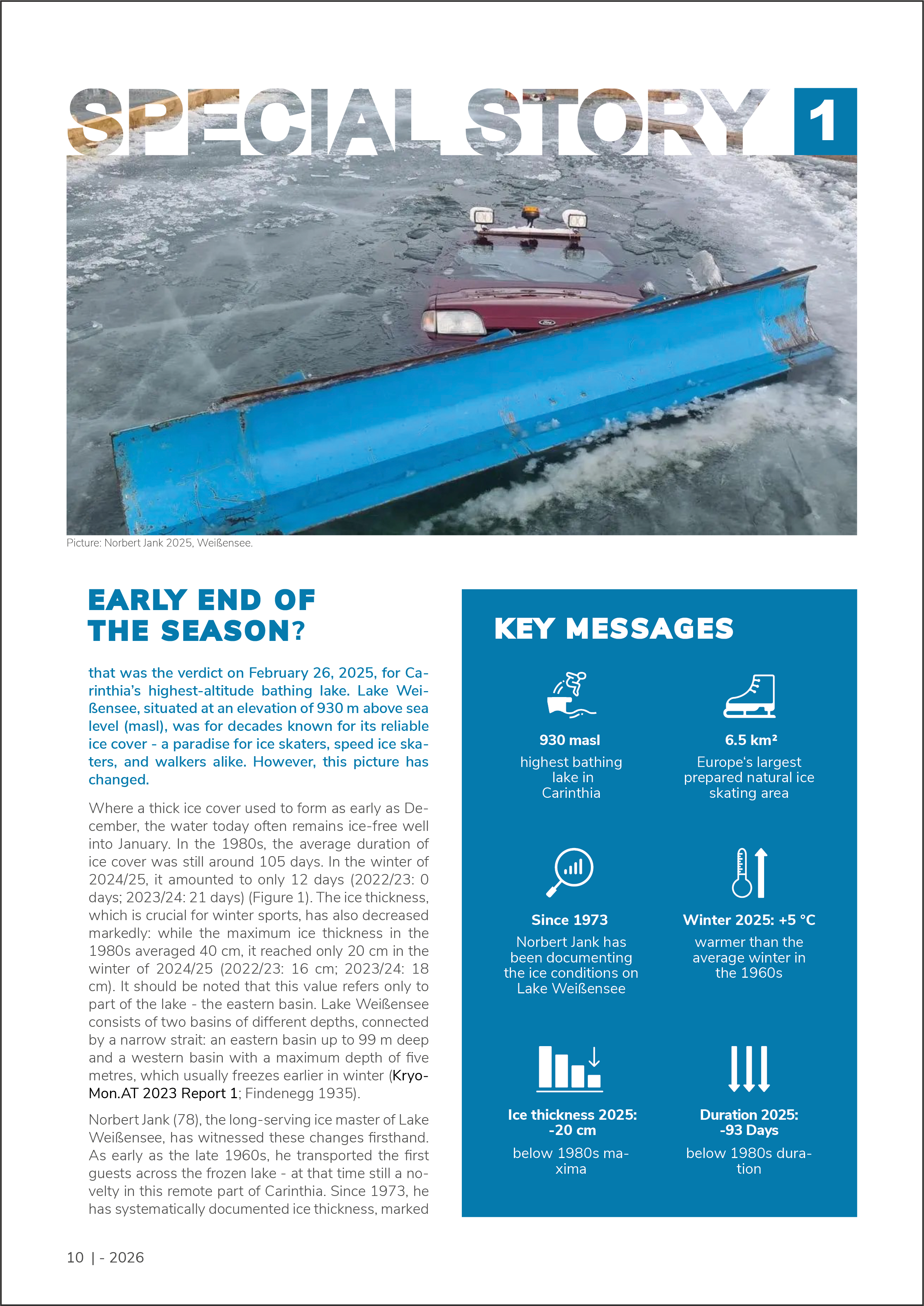
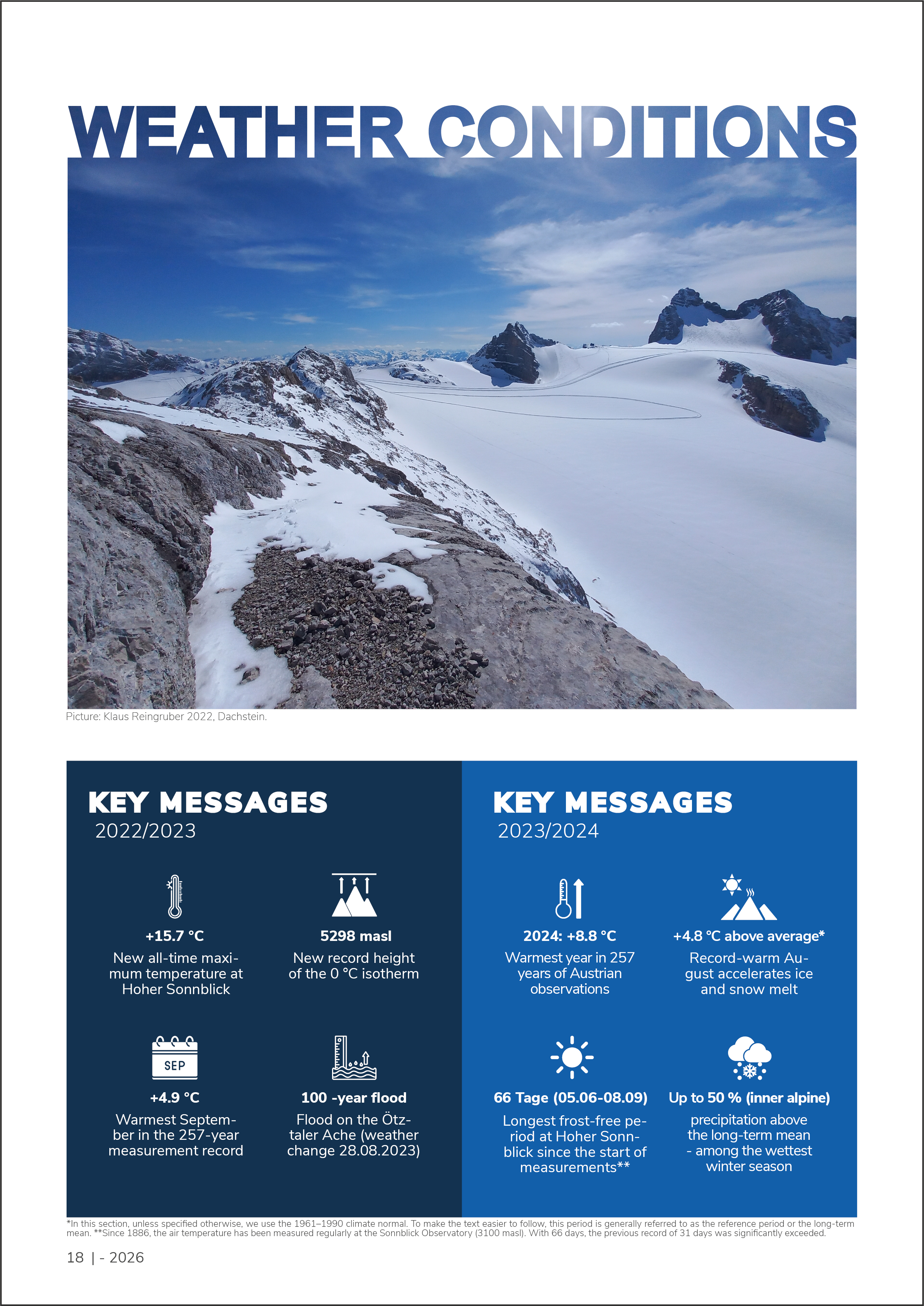
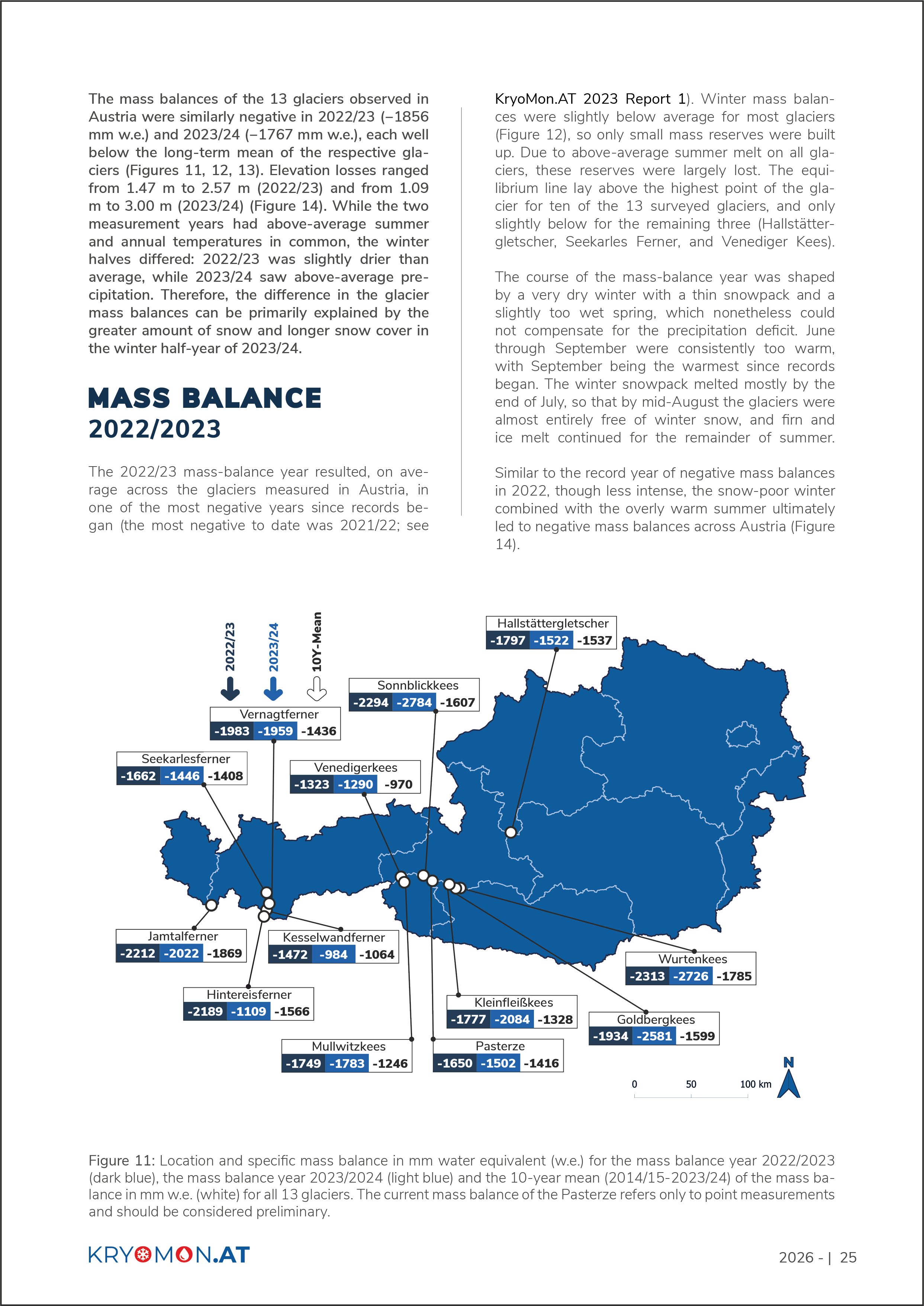
The report is supplemented by four “Special Stories” – short, maximum two-page articles that shed light on exciting events, experiments or methods.
The second KryoMon.AT report – impressions in pictures
Bibliography
Groß, G. (2018): Die Geschichte der Gletscherbeobachtung und -messung in den Österreichischen Alpen. In: Fischer, A., Patzelt, G., Achrainer, M., Groß, G., Lieb, G. K., Kellerer-Pirklbauer, A. und Bendler, G. (Hg.): Gletscher im Wandel. Deutschland: Springer Spektrum Berlin, Heidelberg, S. 53-96.
Hansche, I., Fischer, A., Greilinger, M., Hartl, L., Hartmeyer, I., Helfricht, K., Hynek, B., Jank, N., Kainz, M., Kaufmann, V., Kellerer-Pirklbauer, A., Lieb, G.K., Mayer, C., Neureiter, A., Prinz, R., Reingruber, K., Reisenhofer, S., Riedl, C., Seiser, B., Stocker-Waldhuber, M., Strudl, M., Zagel, B., Zechmeister, T. und Schöner, W. (2023): KryoMon.AT - Kryosphären Monitoring Österreich 2021/22. Kryosphärenbericht Nr. 1. Graz: Universität Graz (doi:10.25364/402.2023.1), S. 203.
Hansche, I., Abermann, J., Beutel, J., Bolch, T., Fischer, A., Hartl, L., Hartmeyer, I., Helfricht, K., Hynek, B., Jank, N., Kainz, M., Kaufmann, V., Kellerer-Pirklbauer, A., Lieb, G. K., Mayer, C., Neureiter, A., Otto, J.-C., Prinz, R., Rasmussen, K. K., Reingruber, K., Reisenhofer, S., Riedl, C., Sattler, B., Seiser, B., Stocker-Waldhuber, M., Strudl, M., von Römer, L., Zagel, B., Zandler, H., Zechmeister, T. & Schöner, W. (2026). KryoMon.AT – Kryosphären Monitoring Österreich 2022/23 & 2023/24. Kryosphärenbericht Nr. 2. Graz: Universität Graz (doi: 10.25364/402.2026.1), S. 61.
Mohnl, H. (1994): Die Schwankungen der Neuschneehöhe und Schneedeckendauer in Österreich (Periode 1895-1992). In: Böhm, R. (Hg.): Jahresbericht des Sonnblick-Vereines für die Jahre 1992-1993. Wien: Eigenverlag des Sonnblick-Vereines, S. 5-47.
Müllner, J. (1924): Zur Vereisung der Seen der Ostalpen. In: Geografiska Annaler 1924, 6, S. 131-179.
Pillewizer, W. (1957): Untersuchungen an Blockströmen der Ötztaler Alpen. In: Geomorphologische Abhandlungen 1957, 5, S. 37-50.
Simony, F. (1895): Das Dachsteingebiet. Ein Geographisches Charakterbild aus den Österreichischen Nordalpen. Wien: Eduard Hölzel Verlag, S. 182.
Wakonigg, H. (1991): Die Nachmessungen an der Pasterze von 1879 bis 1990. Arbeiten aus dem Institut für Geographie in Graz 1991, 30, S. 271-307.