
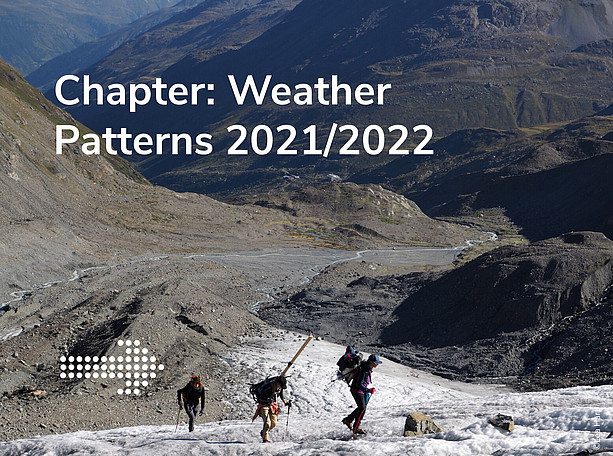
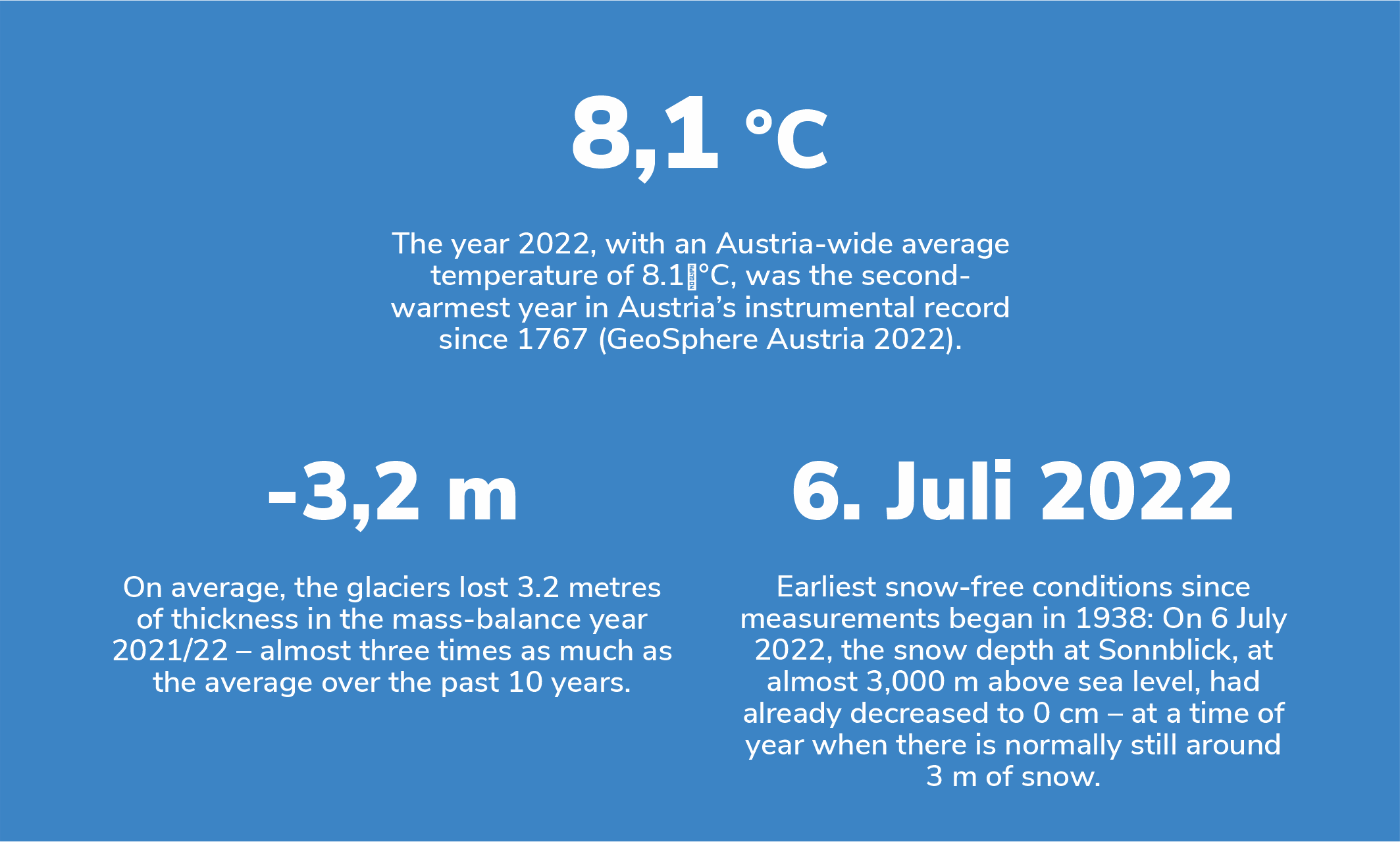
With an average temperature across Austria of 8.1 °C, 2022 was the second warmest year since records began in 1767. This was approximately 1.1 °C above the long-term average for the 1961–1990 period. At the same time, precipitation was around 14% lower than the average for this reference period.
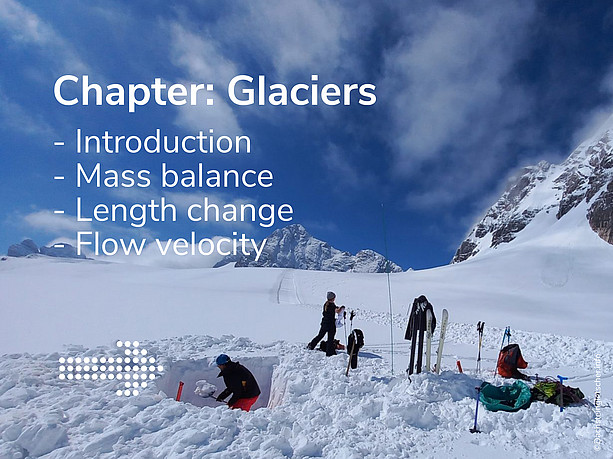
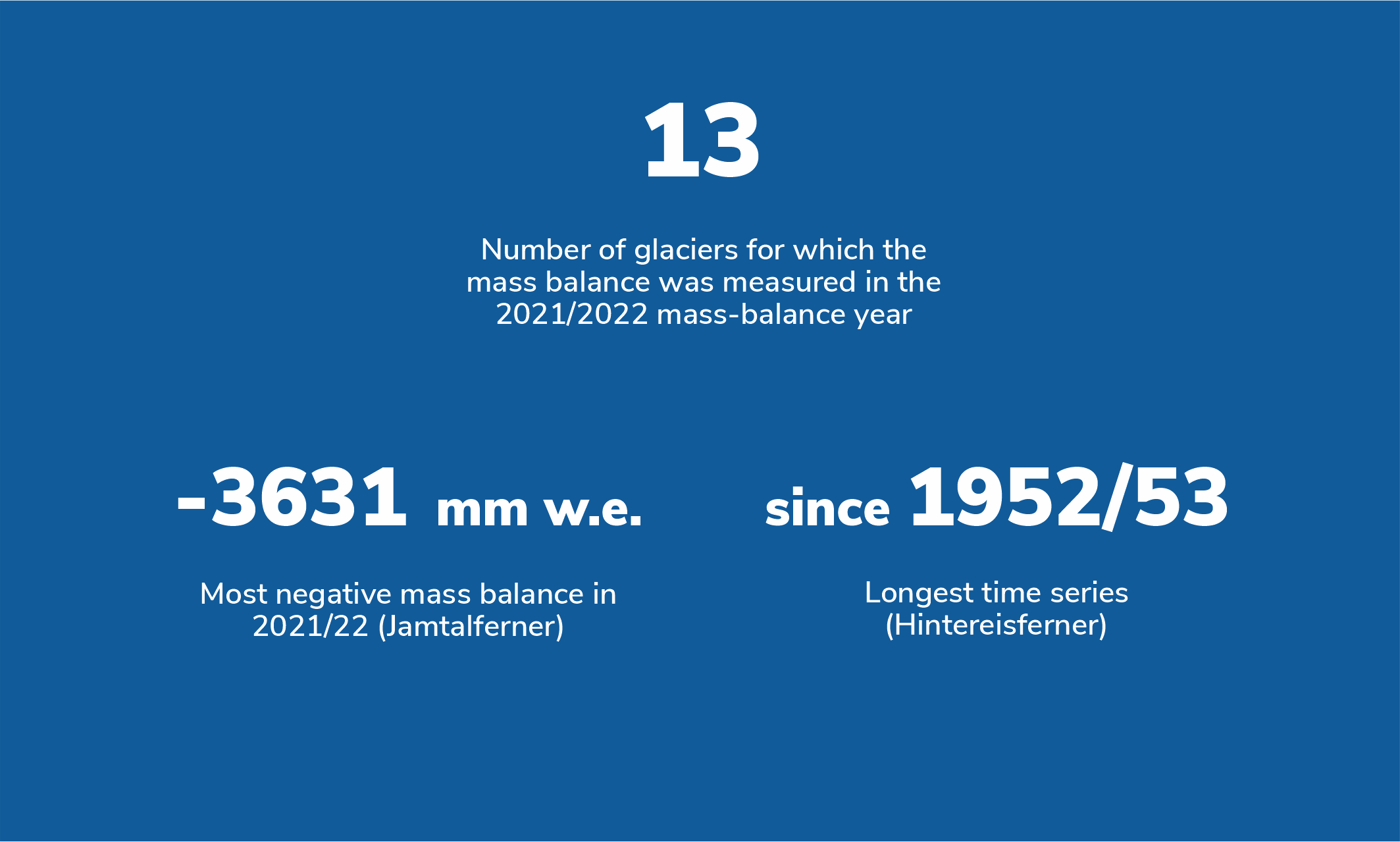
The 2021/22 mass balance year was characterised by an exceptionally thin snow cover and extreme glacier retreat in the Austrian cryosphere. This is particularly evident in the mass balance: the glacier mass balance for 2021/22 represents the most negative value ever recorded for Austrian glaciers. On average, the glaciers lost around 3.2 m in thickness, roughly three times the average value of the previous ten years. Individual glaciers, such as the Jamtalferner, recorded losses of up to −3,631 mm water equivalent.
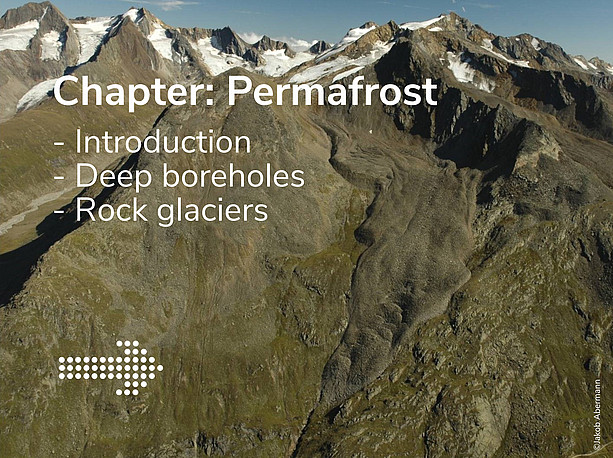
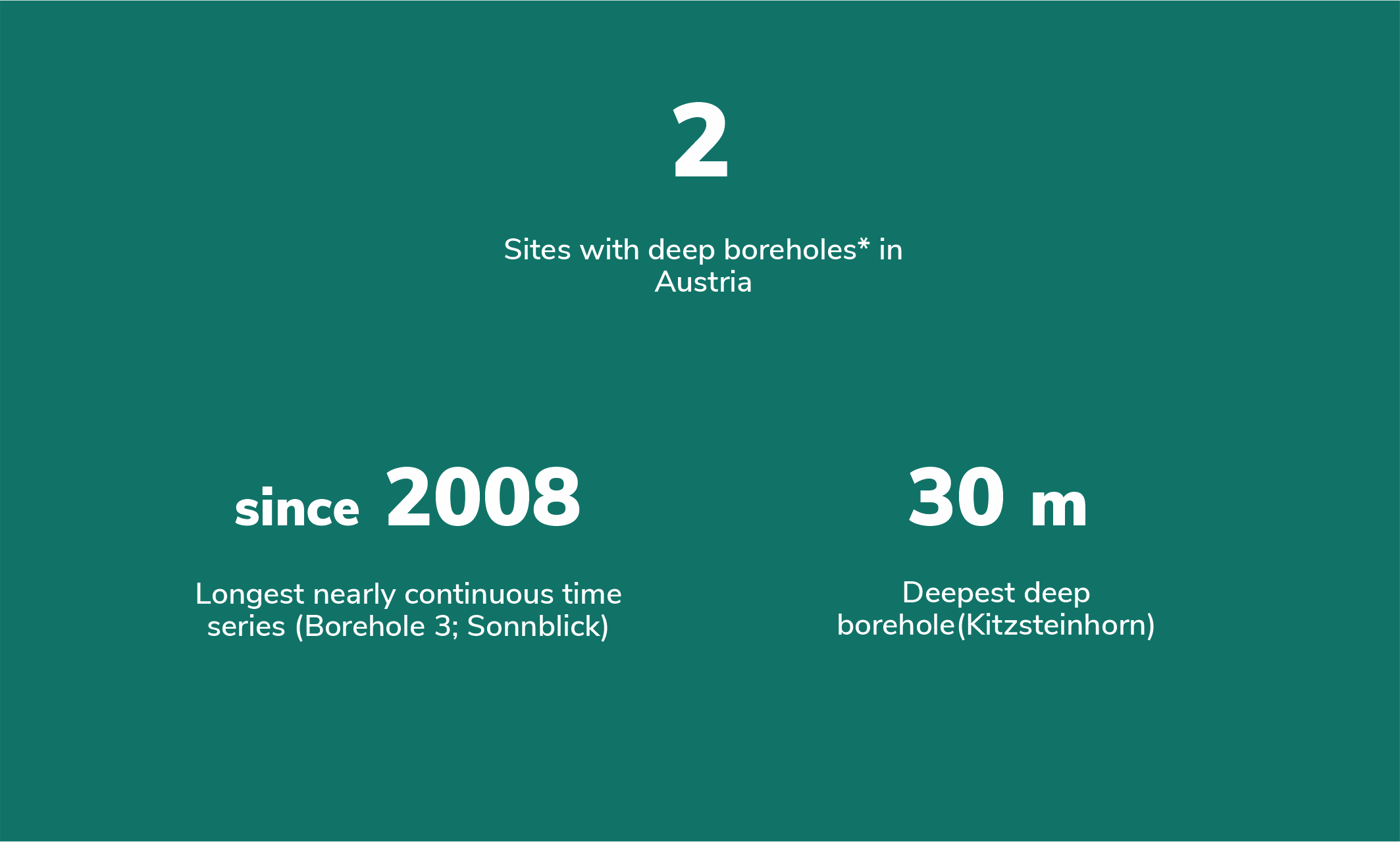
Exceptionally large active layer depths were also recorded in the permafrost, although previous record values were narrowly missed. At the Kitzsteinhorn, for example, an active layer depth of 4.0 m was measured. An even higher value of 4.2 m occurred during the 2016 - 2022 observation period only in the exceptionally hot summer of 2019.
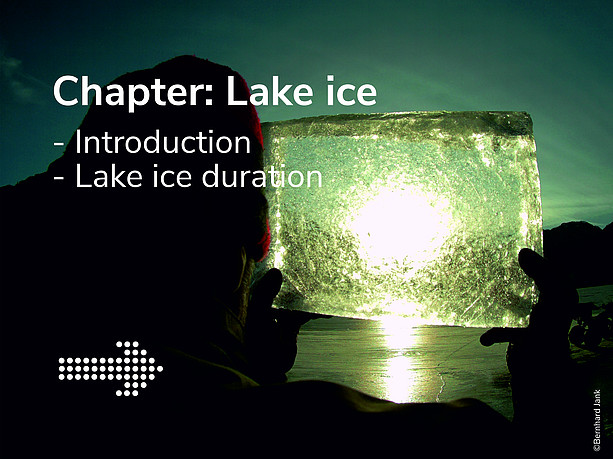
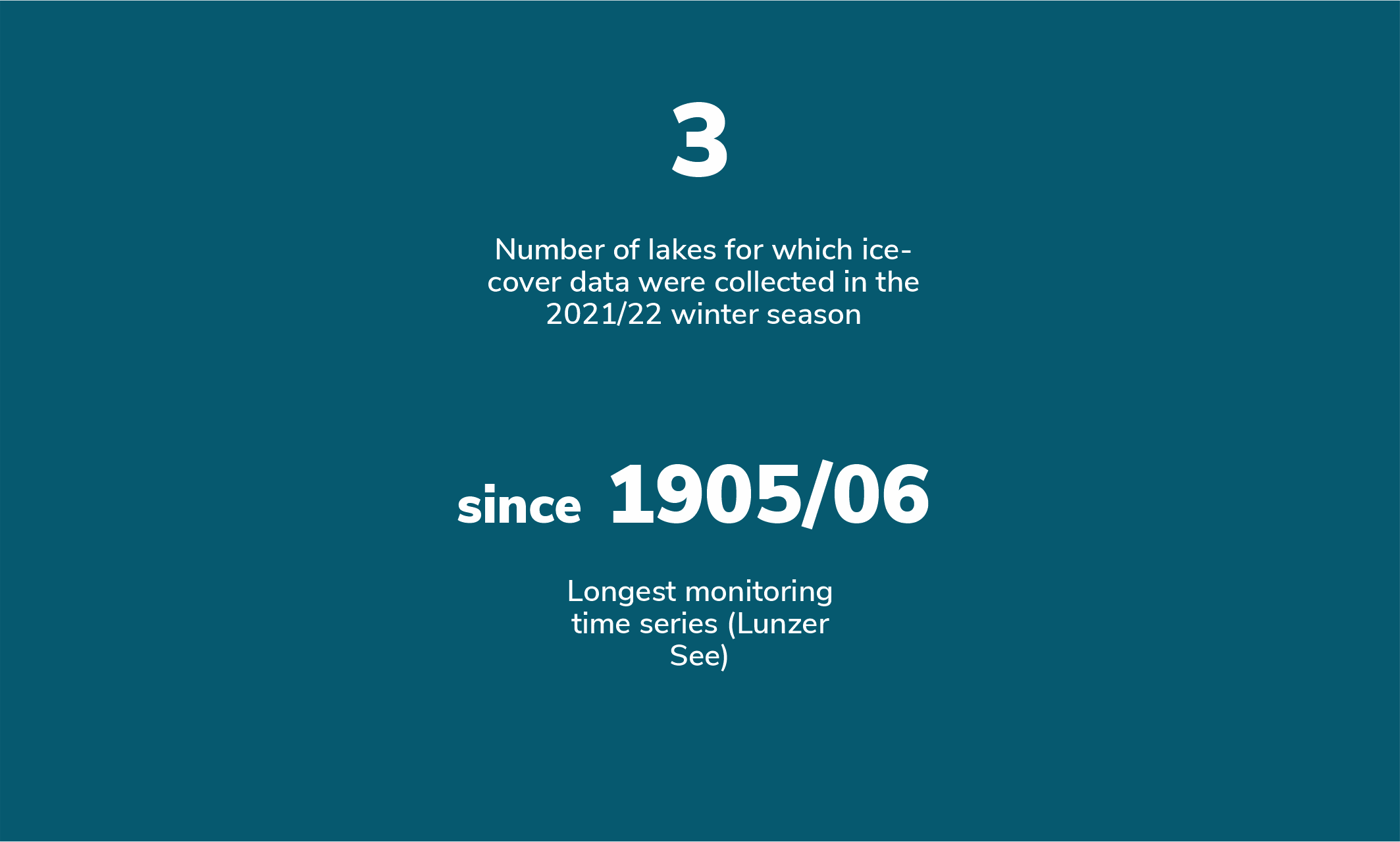
A similar picture emerges regarding the ice cover of Austrian lakes. In particular, bodies of water at lower altitudes exhibited a significantly shorter duration of ice cover during the winter half-year of 2022, in some cases with very late freezing or a complete absence of a continuous ice cover.
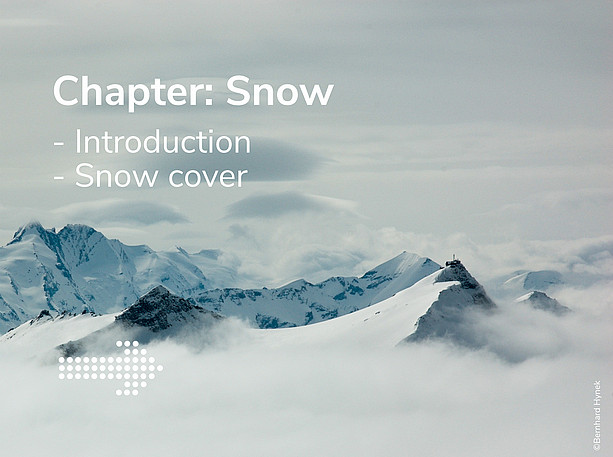
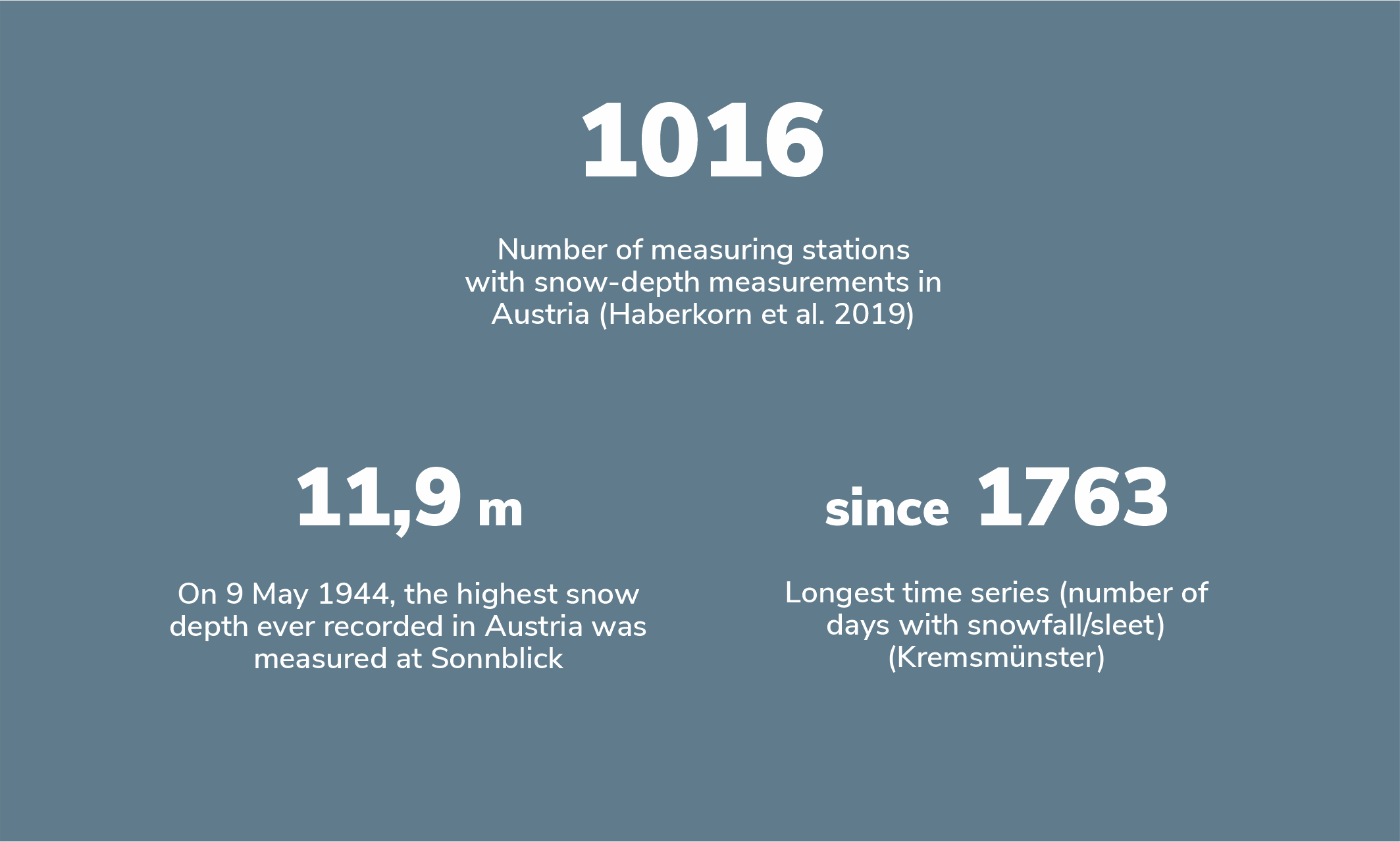
The marked decline in the cryosphere is also reflected in snow depths. These were very low, particularly since the start of 2022, leading to a significantly below-average winter accumulation. At Sonnblick, the snow cover had already melted away completely by 6 July 2022, at a time when a snow depth of around 3 m would normally still be expected there.
Overall, the report shows that 2021/22 was an exceptionally extreme climatic year, in which all components of the cryosphere (snow, glaciers, permafrost and lake ice) declined significantly. The developments described fit into a clearly discernible long-term trend: Austria’s cryosphere is retreating at an ever-increasing rate. This has far-reaching consequences for the environment, the water cycle, natural hazards and tourism.


Here you can download the full report or just individual chapters of the first KryoMon.AT report (Unfortunately, only in German).

Dr. Gerhard K. Lieb

Dr. Viktor Kaufmann

Dr. Andreas Kellerer-Pirklbauer

Dr. Martin Kainz


Mag. Bernhard Hynek

Dr. Ingo Hartmeyer

Dr. Lea Hartl

Iris Hansche MSc.
Dr. Marion Greilinger

Dr. Andrea Fischer

Dr. Thomas Zechmeister


Dr. Bernhard Zagel

Mag. Bernd Seiser

Dr. Martin Stocker-Waldhuber

Mag. Claudia Riedl

Dr. Wolfgang Schöner

Mag. Stefan Reisenhofer

Mag. Klaus Reingruber


Anton Neureiter MSc.

Dr. Christoph Mayer

We would like to extend our sincere thanks to everyone who has contributed to the implementation of KryoMon.AT – Cryosphere Monitoring Austria and to the production of this first report. Our special thanks go to the authors for their expert contributions, to the data providers, and to all the individuals and institutions that are helping to establish, further develop and ensure the long-term sustainability of cryosphere monitoring activities in Austria.
We would like to express our special thanks to the Federal Ministry for Climate Protection, Environment, Energy, Mobility, Innovation and Technology (BMK) for its financial support, without which this project and this report could not have been realised.