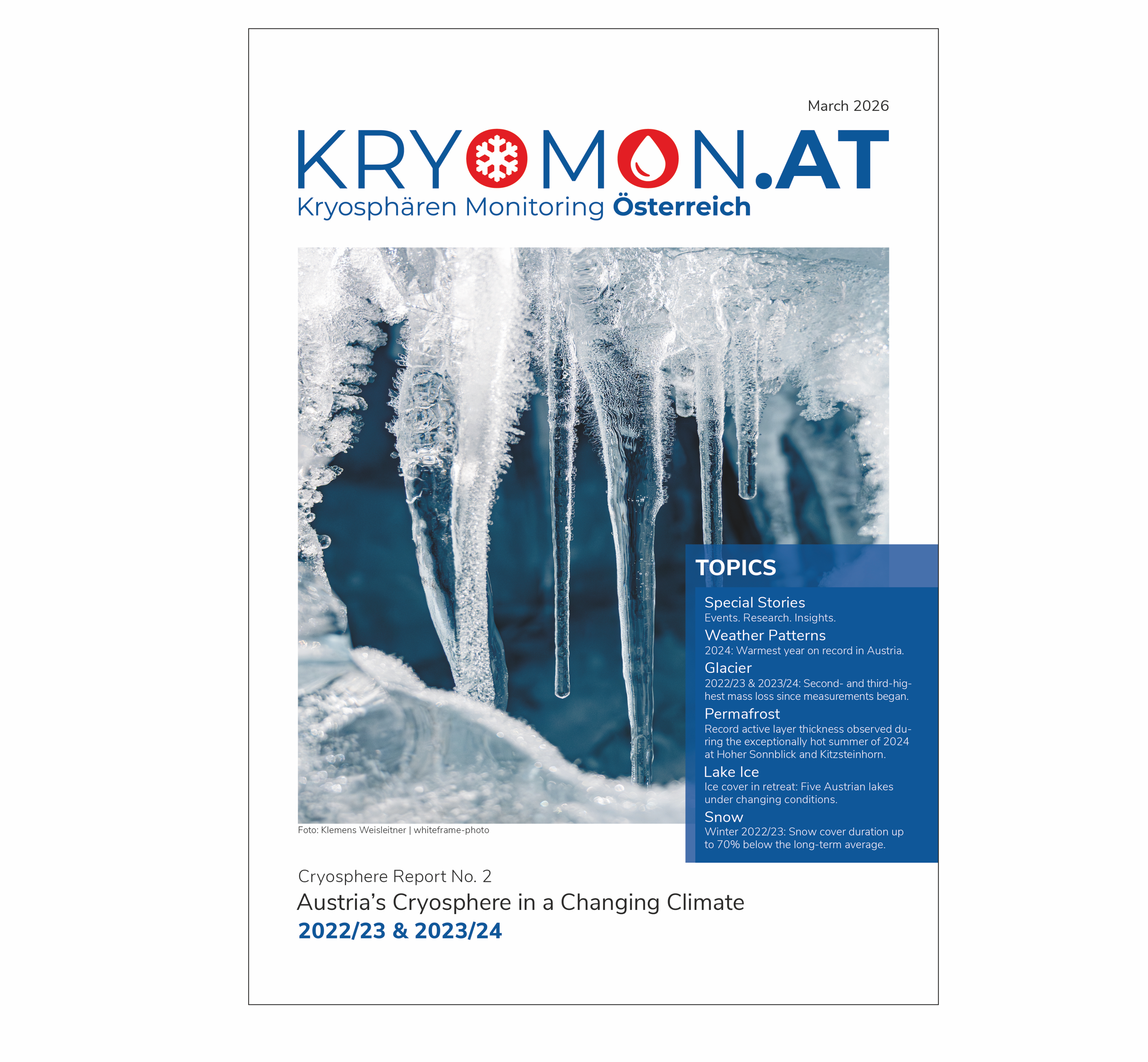

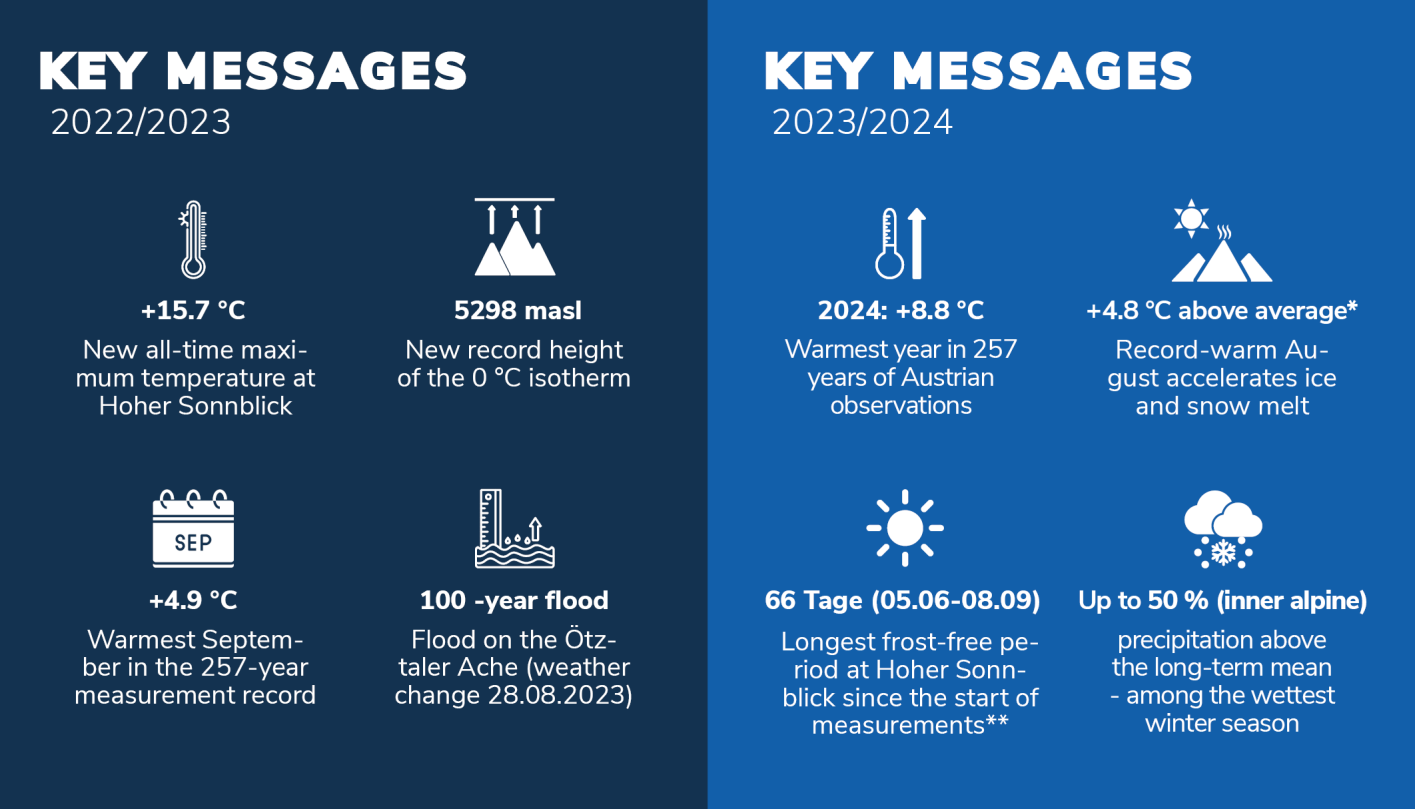
The mass balance years in Austria in 2022/23 and 2023/24 were characterised by exceptionally warm conditions, which led to a marked decline in all components of the cryosphere. With an average temperature across Austria of +8.8 °C, 2024 was the warmest year on record (as of 2024). At Sonnblick, 66 consecutive frost-free days were recorded – more than twice the previous record.
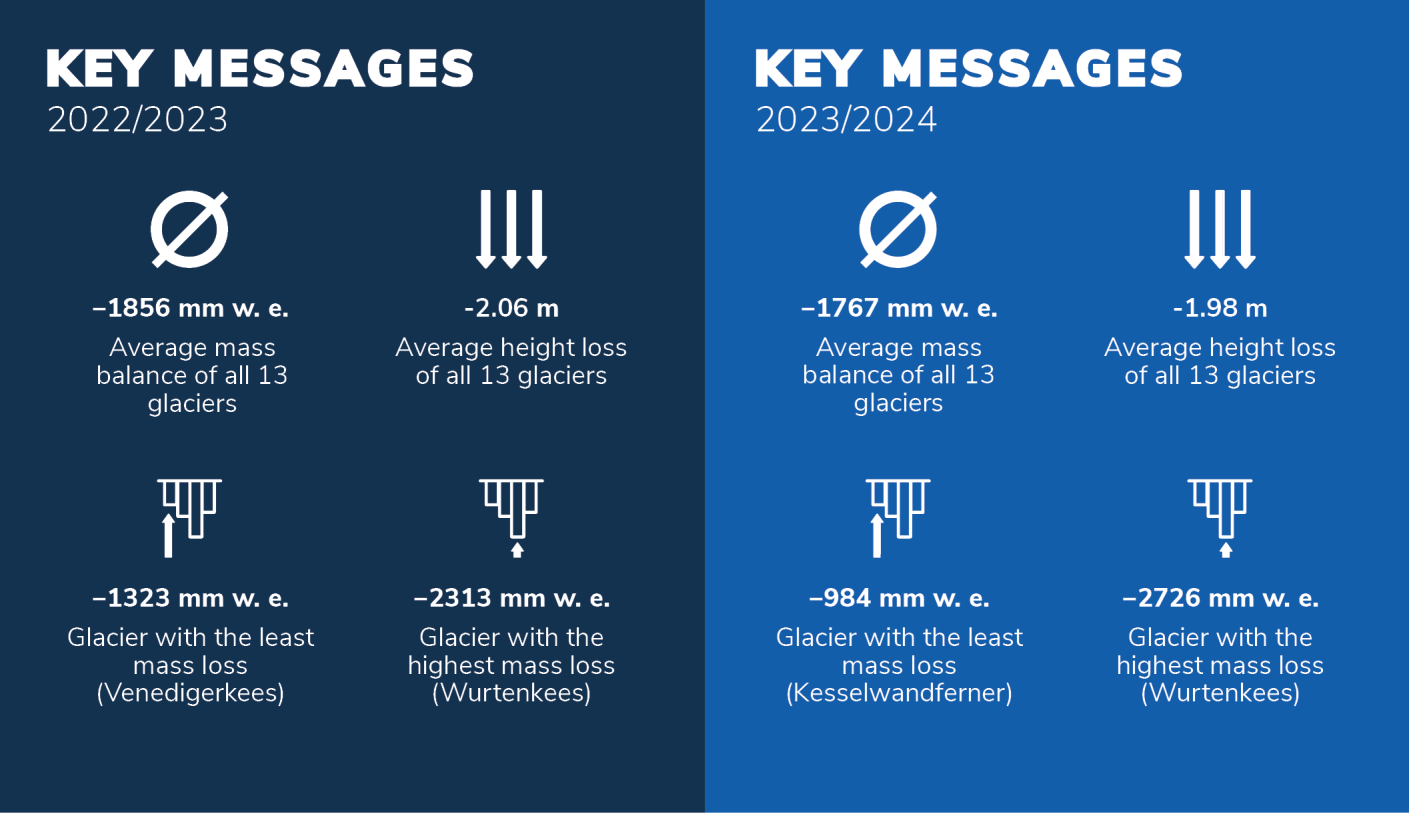
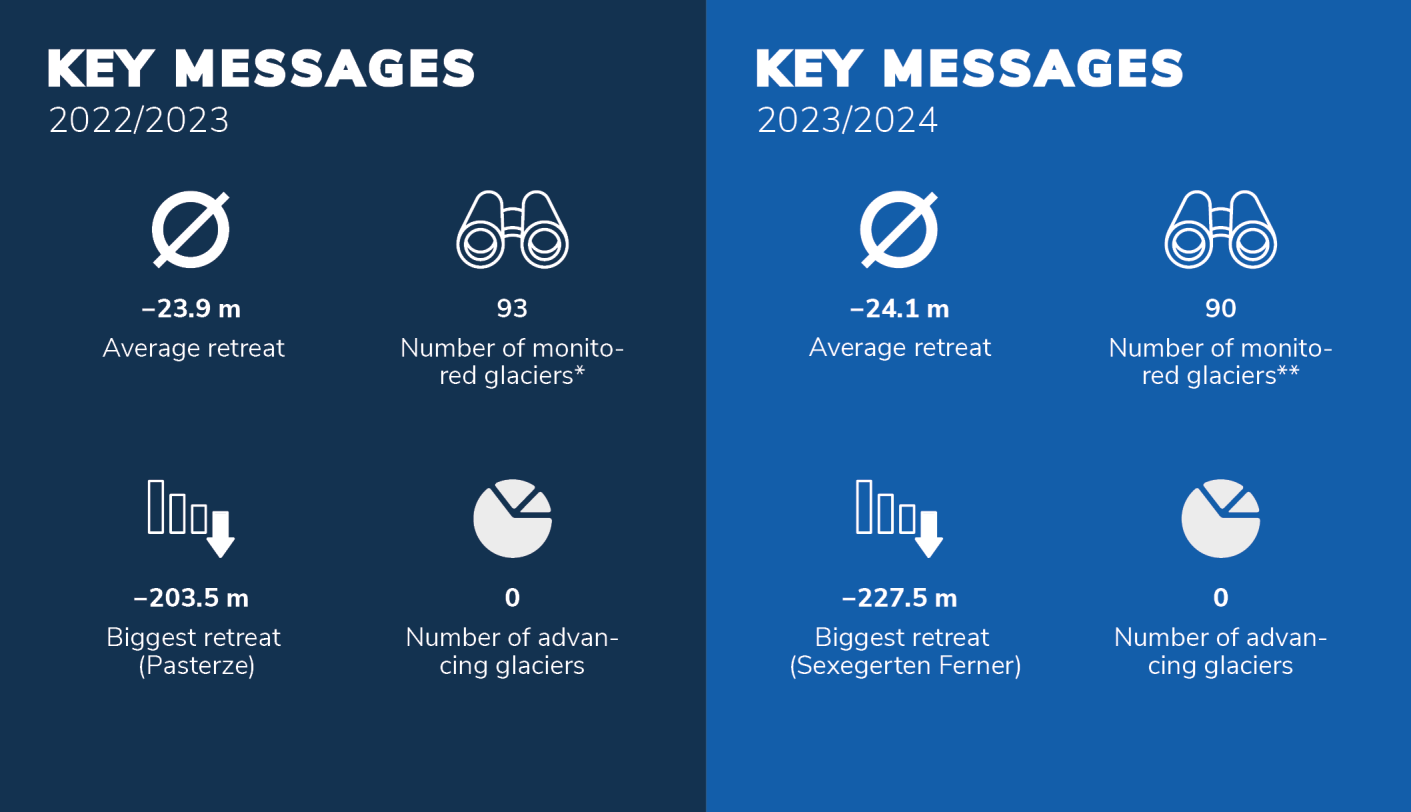
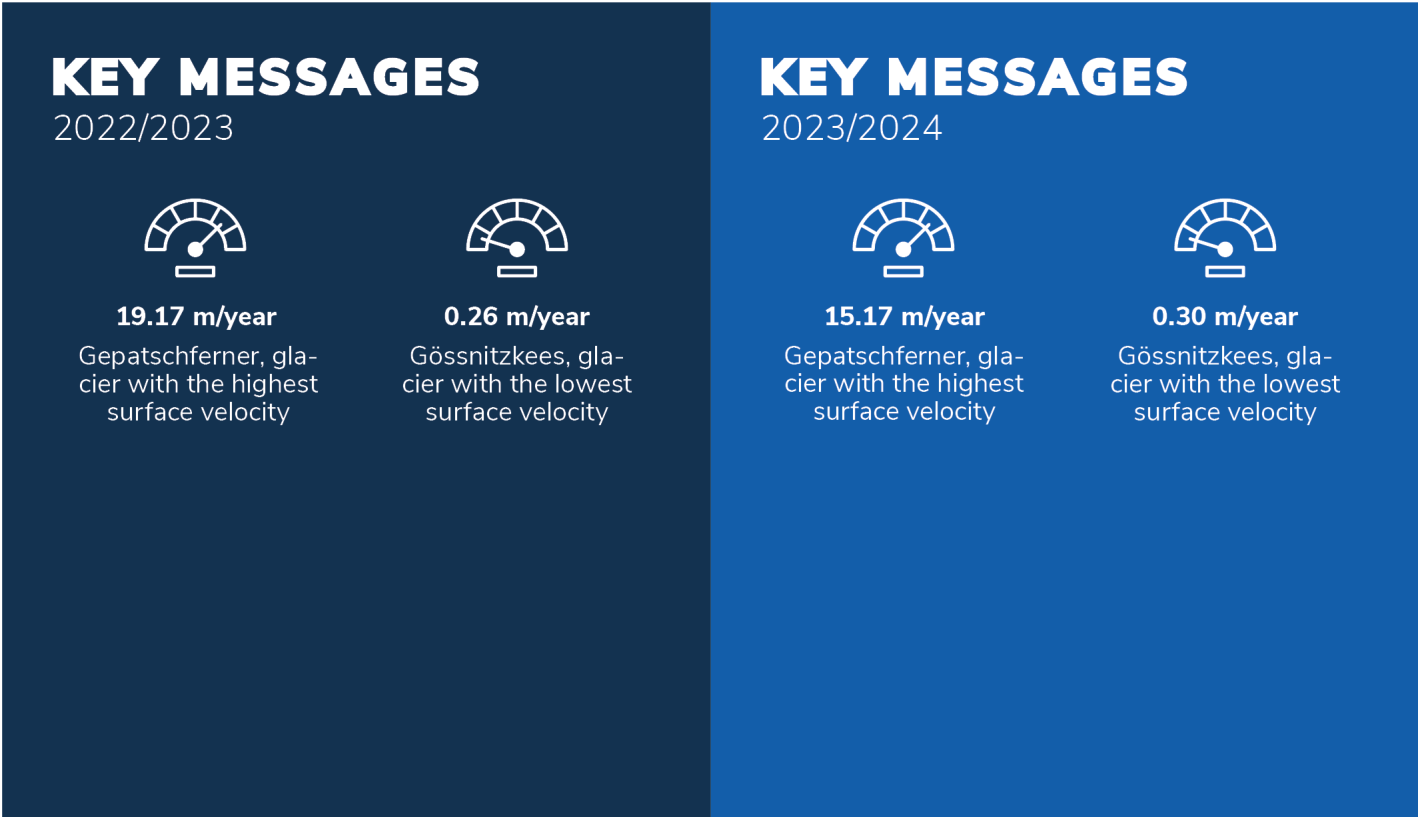
Over the two mass balance years, the 13 monitored glaciers collectively thinned by an average of around 2 metres (−1,856 mm water equivalent in 2022/23 and −1,767 mm in 2023/24) – the second and third highest losses since measurements began. Individual glaciers, such as the Wurtenkees, reached extreme values of up to −2,313 mm (in 2022/23) and −2,726 mm (in 2023/24) of water equivalent. During this period, the glacier tongues retreated by an average of approximately 24 metres per year. The maximum retreat was 203.5 metres at the Pasterze in 2022/23 and 227.5 metres at the Sexegertenferner in 2023/24. At the same time, glacier movement continued to decrease.
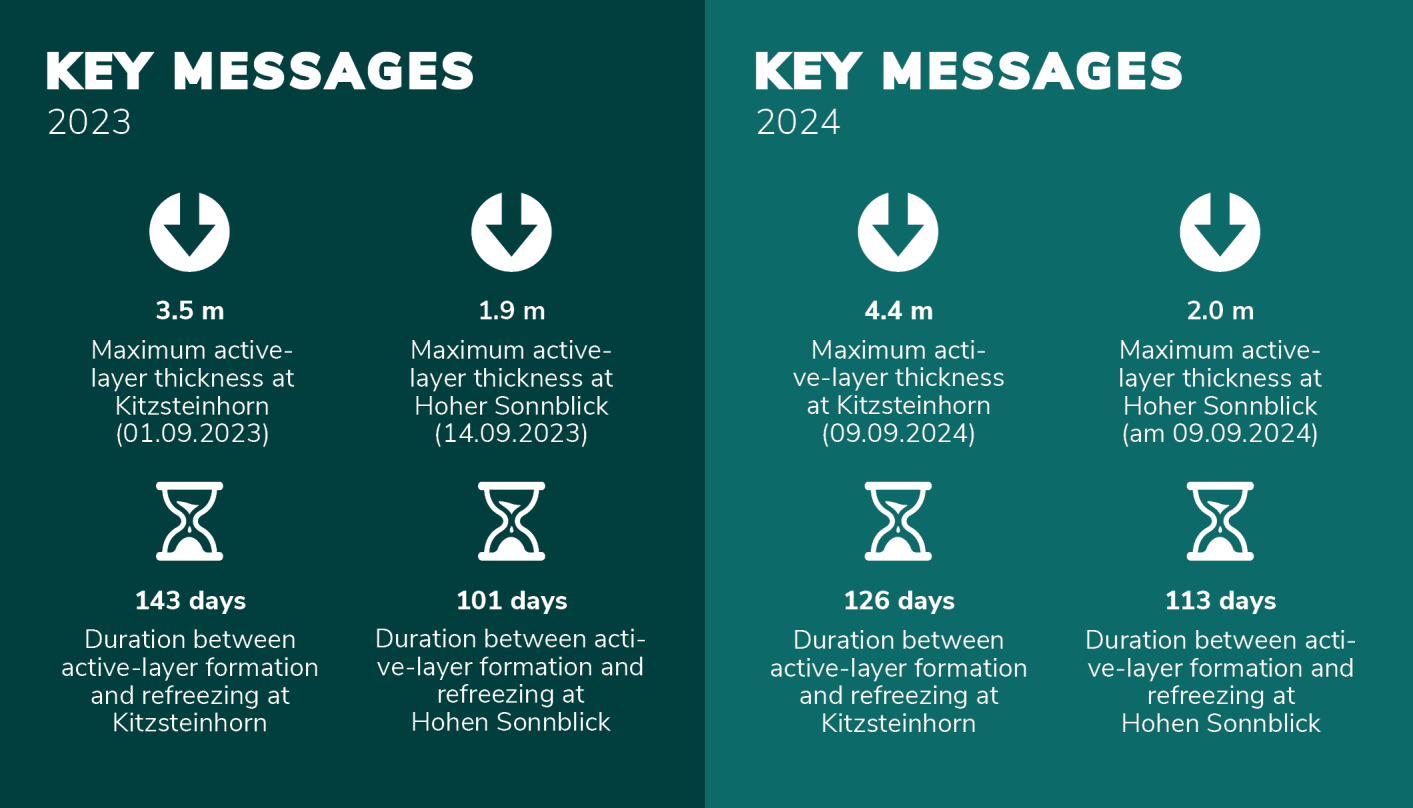
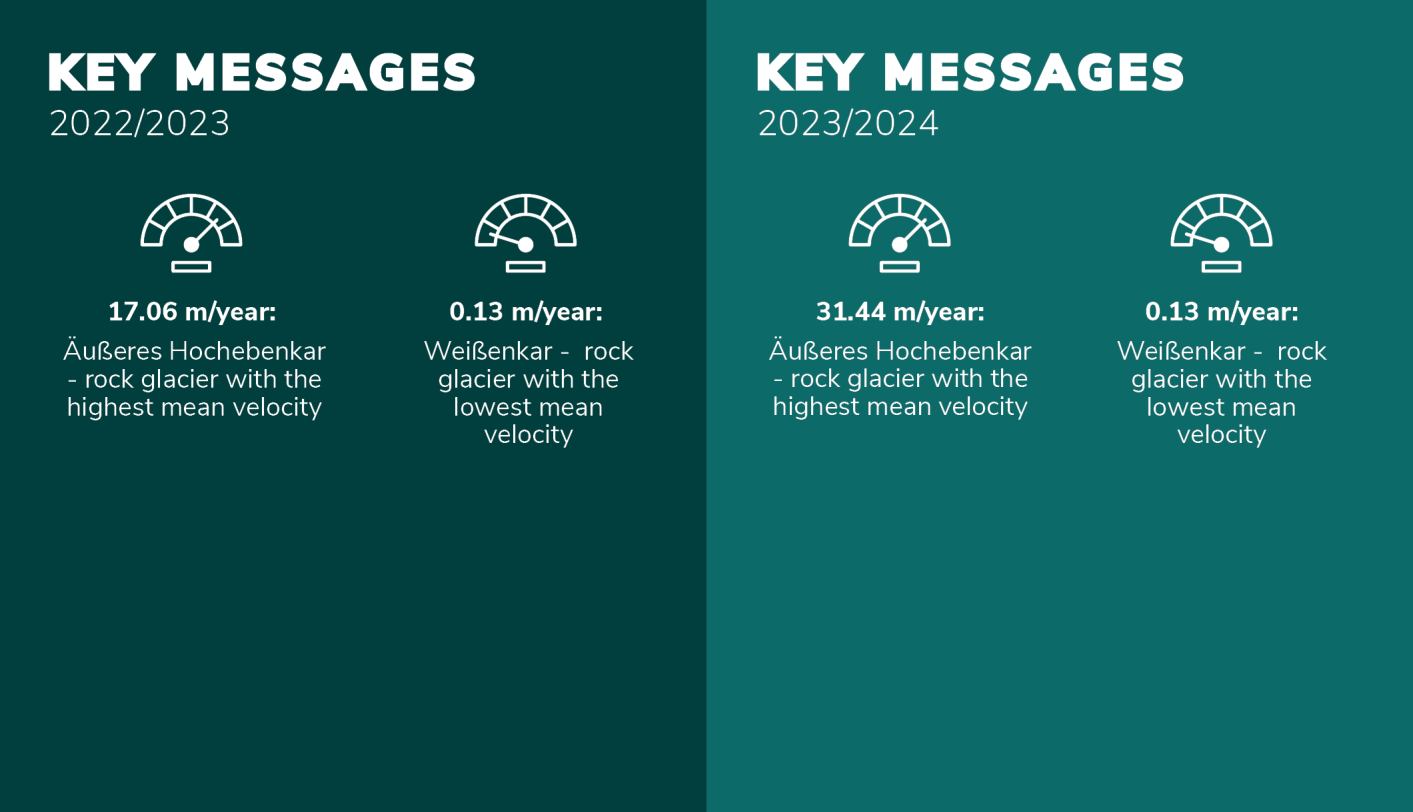
Record values for the thickness of the active layer were measured at the boreholes on the Kitzsteinhorn and the Hoher Sonnblick. At Sonnblick, the active layer thickness doubled from approximately 1 m in 2010 to around 2 m in summer 2024. At Kitzsteinhorn, active layer depths reached 3.5 m in 2023 and 4.4 m in 2024. Near-surface soil temperatures in the Hohe Tauern are warming at a rate of around 0.08 °C per year. New maximum values of up to 2.87 °C were recorded in the 2023/24 measurement year at high altitudes potentially affected by permafrost. The movement rates of rock glaciers are also continuing to increase. At Äußerer Hochebenkar rock glacier, average speeds of over 30 m per year were recorded in 2023/24, with daily values exceeding 20 cm at individual measuring points. A long-term trend towards higher movement rates is evident across all studied rock glaciers and reflects increasingly unfavourable permafrost conditions.
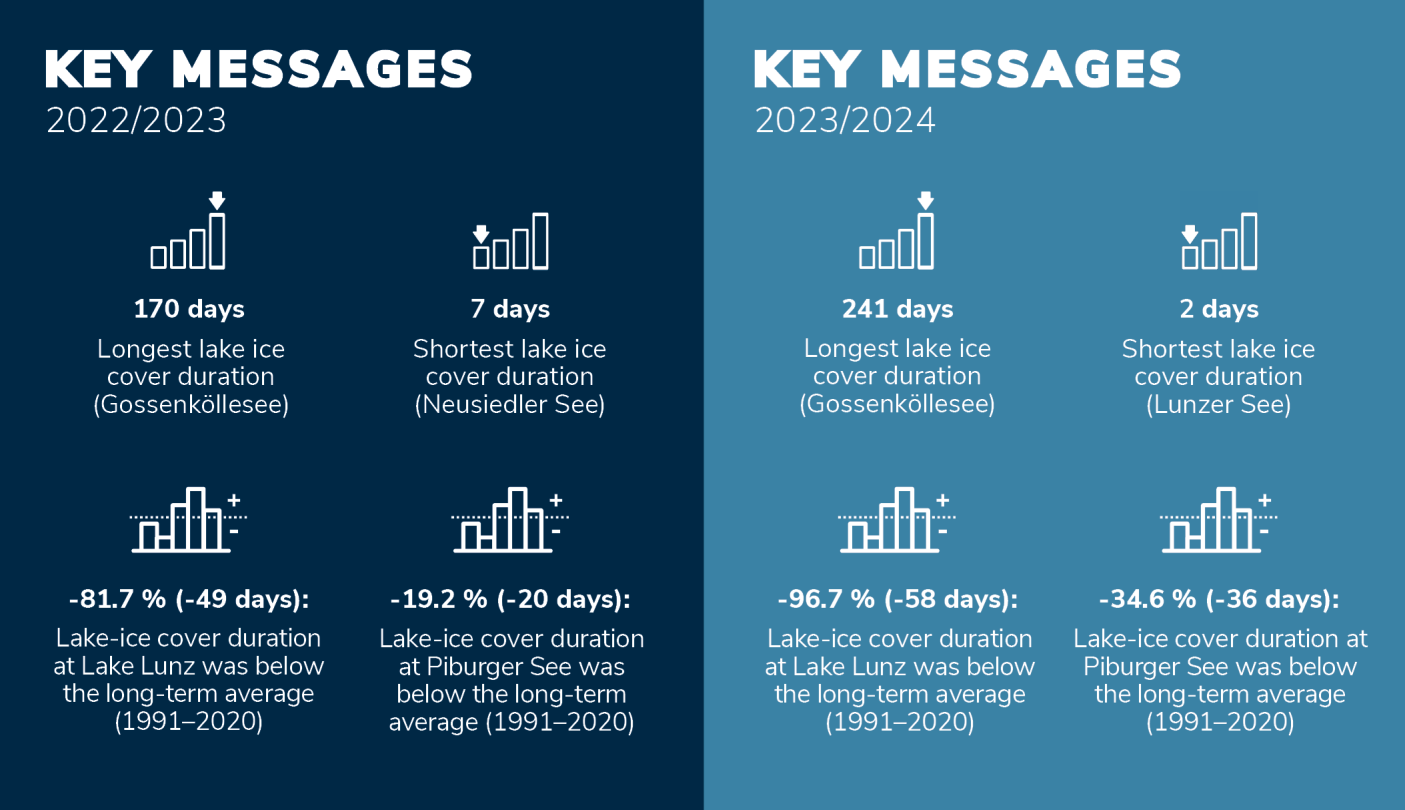
The ice cover of Austrian lakes is equally sensitive to warming. At the low-lying Lake Lunzer See, the duration of closed ice cover decreased by 81.7% (49 days) in winter 2022/23 and by 96.7% (58 days) in winter 2023/24 compared to the 1991–2020 average. In winter 2023/24, the lake froze over for only two days. Similarly, at Lake Piburger See, the duration of ice cover was significantly shorter in 2022/23 (84 days) and 2023/24 (68 days) than the long-term average (36 and 20 days shorter, respectively). By contrast, high-altitude lakes such as Lake Gossenköllesee (2,416 m above sea level) have so far shown no reduction in ice cover: 170 days in 2022/23 and 241 days in 2023/24.
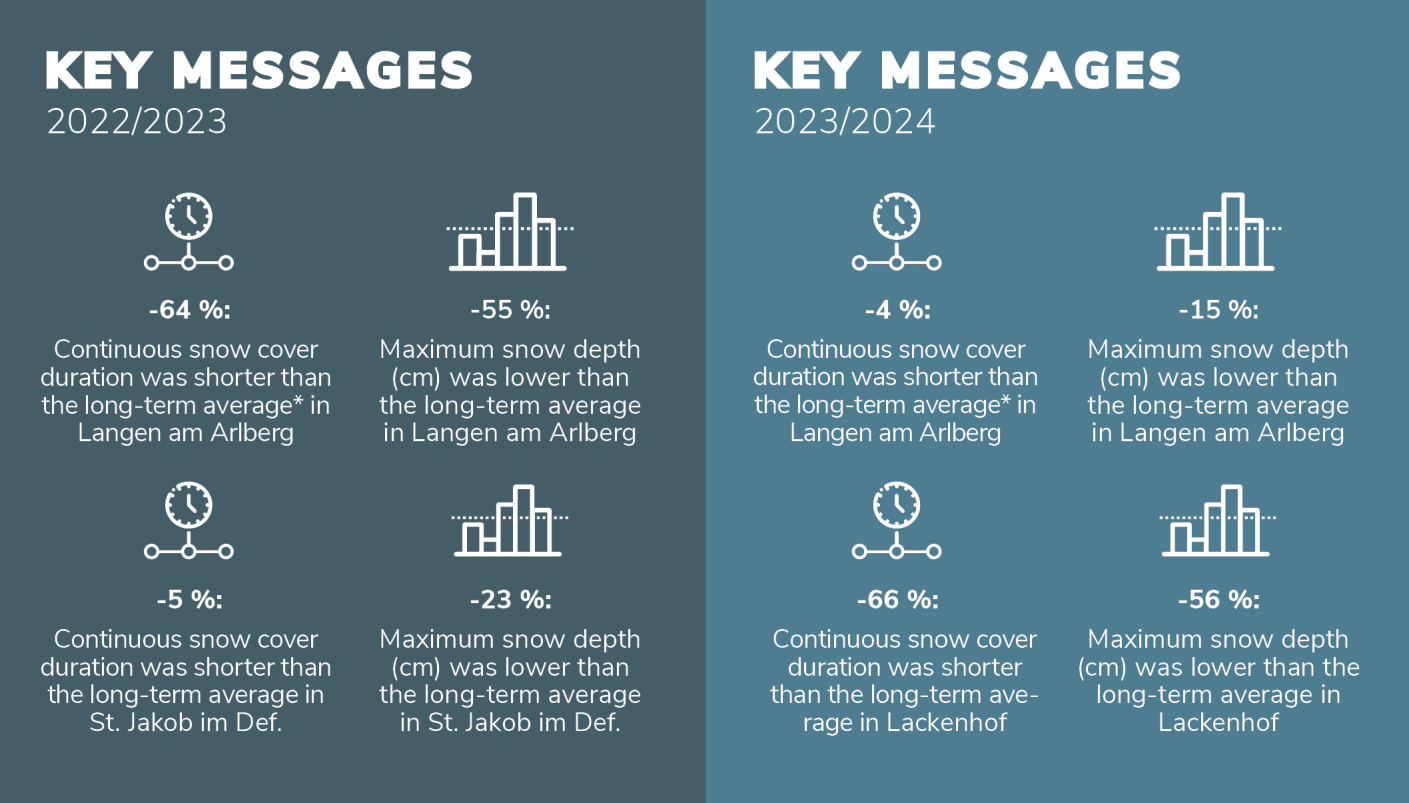
The 2022–23 winter saw significantly less snow than usual in large parts of Austria. At medium altitudes, maximum snow depths were up to 70% below the 1991–2020 average, while snow cover lasted for only 40–60% of the usual duration in many places. The snow cover remained below average in 2023/24 too: in Langen am Arlberg, the duration of winter snow cover decreased by 4% compared with the reference period, and by as much as 66% in Lackenhof. While fresh snow continues to fall, it is melting away ever more rapidly due to higher temperatures, meaning that only at higher altitudes do snow cover formations develop that last longer.
Overall, the report shows that Austria's cryosphere declined significantly in the years 2022/23 and 2023/24. Documented temperature records, glacier mass losses of around 2 metres per year, increasing permafrost thaw depths of up to 4.4 metres, a drastically shortened lake ice season on lower-lying lakes, and significantly reduced snow depths all paint a clear picture: the cryosphere in Austria is in a state of accelerated retreat.





We would like to extend our heartfelt thanks to everyone who has contributed to the development of the KryoMon.AT – Cryosphere Monitoring Austria project and to the production of the KryoMon.AT reports. We would particularly like to thank the authors for their expert contributions, the data providers, and everyone who is helping to further develop the monitoring activities and contribute to their continuation. The long-term funding of such monitoring programmes cannot be taken for granted. We therefore appreciate all the great personal commitment of everyone involved.
Special thanks go to the numerous research groups and volunteers whose long-standing commitment forms the basis of the data presented – including the data collectors of previous generations. It is thanks to their efforts that we have continuous measurement series and key insights into the interactions between climate and the cryosphere.
Special thanks go to the Federal Ministry of Agriculture and Forestry, Climate and Environmental Protection, Regions and Water Management for funding this report.
We would also like to thank Manuela Gloor (UmbruchBox) for her support in ensuring the report is accessible to all.